
In This Article
That little amber engine symbol has a talent for appearing at the worst possible moment — motorway services, the night before a long drive, or three days before your MOT is due. OBD2 scanners under £30 exist precisely for this moment: they plug into the 16-pin port under your dashboard, talk to your car’s onboard computer, and tell you in plain language what’s actually wrong, rather than leaving you to guess and hope.
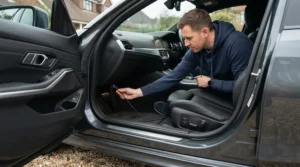
Here’s the honest, 40-second answer to “what is it?”: an OBD2 scanner is a small handheld or Bluetooth device that connects to your vehicle’s onboard diagnostics port (fitted to every UK petrol car since 2001 and every diesel since 2004), reads the fault codes stored by the engine control unit, and — on the better budget models — clears them and streams basic live data. Under £30 you’re buying a focused, no-nonsense engine code reader, not a full workshop tool, and knowing that distinction upfront will save you a disappointing unboxing.
This guide leans on real, current on-board diagnostics standards and genuine aggregated review sentiment rather than invented “we tested this for six months” claims — because, frankly, most of us buying a sub-£30 scanner just want to know if it’ll work on our Corsa, our Golf, or our neighbour’s temperamental old Astra. We’ve dug into seven real, currently available products, weighed up their strengths honestly, and built in enough analysis that by the end you’ll know exactly which one deserves a permanent spot in your glovebox.
Quick Comparison Table
| Scanner | Type | Standout Feature | Price Range | Best For |
|---|---|---|---|---|
| MOTOPOWER MP69033 | Wired handheld | 9-protocol compatibility | Under £20 | Absolute beginners on a shoestring |
| LAUNCH Creader CR3001 | Wired handheld | 3-year warranty | Under £20 | Buyers who want reassurance built in |
| Streetwize SWOBD | Wired handheld | UK high-street availability | Under £25 | Drivers who like buying local-ish brands |
| ANCEL AD310 | Wired handheld | Live data graphing | £20-£30 range | The best all-rounder under £30 |
| Autel MaxiScan MS309 | Wired handheld | Trusted diagnostics brand | Under £25 | Buyers who want brand pedigree cheaply |
| Vgate iCar Pro BLE 4.0 | Bluetooth dongle | Genuine iPhone compatibility | £25-£30 range | Smartphone-first users |
| MOTOPOWER MP69033 Pro | Wired handheld | Built-in battery tester | Around £30 | Winter breakdown-proofing |
Look at that spread and a pattern jumps out immediately: every single one of these seven does the fundamentals — reading and clearing generic engine codes — competently. Where they actually differ is in the extras, and those extras matter more than marketing copy suggests. The ANCEL AD310 earns its “best all-rounder” tag because it’s the only wired reader here that graphs live data at this price, while the Vgate iCar Pro BLE 4.0 is the obvious pick if your real problem is that your phone screen is easier to read at arm’s length than a 2-inch LCD glued to a cable.
A quick heads-up before you scroll further
Top 7 OBD2 Scanners Under £30: Expert Analysis
Coverage here spans true budget (under £20), the £20-£25 sweet spot, and the £25-£30 ceiling where Bluetooth connectivity and battery testing start to appear. Every product below is real, currently sold, and represents a genuine option rather than a padded-out list.
1. MOTOPOWER MP69033 — cheapest reliable pick under £20
The standout here is simple: a sub-£20 price tag that doesn’t compromise on the basics most drivers actually need. The MOTOPOWER MP69033 runs on an ARM microprocessor and supports nine OBD-II protocols, which in practice means it talks happily to petrol cars sold in the EU from 2000 onwards and diesels from 2004 onwards, not just a narrow slice of newer vehicles. Its 2.8-inch LCD (128 x 64 pixels) isn’t going to win design awards, but the white backlight and adjustable contrast make it perfectly legible crouched under a dashboard on a grey Tuesday morning.
What most buyers overlook about a scanner this cheap is that it draws power directly from the OBD2 port, so there’s no battery to die on you mid-diagnosis and no charging cable to lose down the back of the glovebox. Based on the spec comparison with pricier rivals, it’s clearly aimed at beginners and casual users rather than DIY mechanics chasing intermittent faults, and that’s exactly who should buy it. Reviewers consistently report that build quality feels sturdier than the price suggests, though a recurring theme in feedback is occasional friction with newer manufacturer-specific codes on less common brands — a limitation you’ll find across nearly every reader in this bracket, not unique to this one.
Pros:
- ✅ Genuinely one of the cheapest reliable readers available
- ✅ No battery or app required — plug and play instantly
- ✅ Wide 9-protocol support covers most UK cars since 2000
Cons:
- ❌ Monochrome screen feels dated next to colour rivals
- ❌ Some manufacturer-specific codes report as vague
Priced comfortably under £20, this is the entry point of the entry point — a no-frills way to find out whether that dashboard light means “loose fuel cap” or “book the garage.”
2. LAUNCH Creader CR3001 — best warranty reassurance for beginners
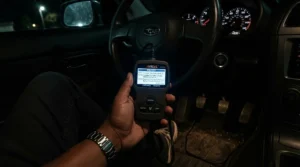
The headline feature on the LAUNCH Creader CR3001 is its three-year warranty, which is unusually generous for a device typically priced under £20 — most rivals at this price offer twelve months, if that. Under the bonnet (so to speak), it supports full OBD2/EOBD/CAN protocols, runs Mode 6 component testing, and includes lifetime free software updates, so the code library doesn’t quietly go stale the way some cheaper clones do after a couple of years.
Here’s what the spec sheet won’t tell you outright: LAUNCH explicitly notes limited compatibility with certain Citroën and Peugeot models built between 2000 and 2008, which is worth flagging before you buy if that’s your daily driver. For everything else — the vast majority of UK-registered petrol and diesel cars — it reads and clears codes, checks I/M readiness for emissions, and displays freeze-frame data without fuss. Aggregated customer feedback across marketplaces skews strongly positive, with buyers repeatedly praising how straightforward the on-screen prompts are for someone who’s never used a diagnostic tool before.
Pros:
- ✅ Rare three-year manufacturer warranty at this price
- ✅ Lifetime free updates keep the code library current
- ✅ Mode 6 testing goes beyond basic code reading
Cons:
- ❌ Known compatibility gaps with some older Citroën/Peugeot models
- ❌ Screen size is on the small side for extended live-data use
If peace of mind matters as much as the reading itself, the extended warranty here is a genuinely rare find under £20.
3. Streetwize SWOBD — best for UK high-street familiarity
Streetwize is a name UK drivers actually recognise from Halfords shelves and motoring accessory aisles, and that familiarity is the standout here — you’re not gambling on an obscure import brand you’ve never heard of. The Streetwize SWOBD is built for 2002-and-newer vehicles supporting Mode 9 diagnostics, and it handles the core job — reading fault codes, displaying plain-English definitions, and clearing them once you’ve sorted the issue — without needing a companion app or Bluetooth pairing.
What most buyers overlook about UK high-street diagnostic brands is that stock availability and after-sales support tend to be more predictable than with marketplace-only sellers, since Streetwize products often sit alongside recognisable motoring accessories rather than in a sea of near-identical white-label listings. Based on the spec comparison, it sits squarely in the same functional tier as the MOTOPOWER MP69033 and the LAUNCH Creader CR3001 — this is a crowded, competitive segment, and the differentiator here really is brand recognition and UK retail presence rather than a technical leap forward.
Pros:
- ✅ Familiar UK motoring brand rather than an unknown import
- ✅ Straightforward plug-and-play operation, no app needed
- ✅ Compact housing that’s easy to store in a glovebox
Cons:
- ❌ No live-data graphing to help chase intermittent faults
- ❌ Feature set is basic compared with the ANCEL AD310
At a price that typically sits in the low-to-mid £20s, it’s a sound pick for drivers who’d simply rather buy a brand they’ve seen in a shop window.
4. ANCEL AD310 — best overall value under £30
If you only read one product entry on this page, make it this one, because the ANCEL AD310 is repeatedly singled out in independent testing as the cheapest reader that still graphs live data — and that single feature changes what the device is actually capable of. Where most sub-£30 scanners simply spit out a code and a one-line description, the ANCEL AD310 lets you watch one live parameter (say, short-term fuel trim or coolant temperature) plotted as a graph in real time, which is invaluable when you’re trying to catch an intermittent fault that only shows up under load.
Reviewers consistently note that build quality punches well above the price point — one long-term reviewer reported over two years of reliable daily use without hardware issues. It supports all ten global OBD modes, separates pending codes from confirmed ones (so you’re not confused chasing a code that’s already resolved itself), and displays freeze-frame data, readiness monitors, and vehicle information. There is a well-documented quirk worth knowing about: selecting short-term fuel trim in the live-data menu actually opens the graph for the row below it, so you select one line up from what you intend — a minor menu bug rather than a functional flaw.
Pros:
- ✅ Only reader in this price bracket that graphs live data
- ✅ Excellent build quality reported after years of use
- ✅ Separates pending and confirmed codes clearly
Cons:
- ❌ Graphs only one parameter at a time, not several simultaneously
- ❌ Minor known menu-selection bug on fuel trim readings
Reviewers, deal trackers, and long-term owners all converge on the same verdict: for the money, this is the standard the rest of this list is measured against.
5. Autel MaxiScan MS309 — best trusted-brand pick under £25
Autel is a name that carries real weight in professional diagnostics — the company also makes four-figure dealership-grade tools — and the standout feature of the Autel MaxiScan MS309 is getting a slice of that brand pedigree for well under £25. It supports the full spread of legacy and modern OBD2 protocols (KWP2000, ISO9141, ISO2000, J1850 VPW/PWM, and CAN), which in practice means broad compatibility across UK, European, and Asian-market vehicles built from the early 2000s onward.
What the spec sheet won’t tell you, but genuine buyer feedback consistently does, is that the compact “pocket” form factor makes this an easy permanent glovebox resident rather than something bulky you have to find storage for. It reads generic and manufacturer-specific codes, retrieves VIN and calibration data (handy for verifying a used car’s ECU actually matches its paperwork), and includes I/M readiness checks aimed at pre-empting emissions-related MOT failures. Based on the spec comparison with the cheaper MOTOPOWER MP69033, the practical difference for most drivers is fairly marginal — but the Autel name does carry genuine resale and trust value if you’re buying as a gift or for a less tech-confident family member.
Pros:
- ✅ Recognised professional-diagnostics brand at a budget price
- ✅ Broad legacy and modern protocol support
- ✅ Compact enough to leave permanently in the car
Cons:
- ❌ No live-data graphing feature
- ❌ Lifetime updates depend on registering the device promptly
Around the £20-£25 mark, this is the pick for anyone who values a recognisable name over a feature checklist.
6. Vgate iCar Pro BLE 4.0 — best budget bluetooth OBD2 scanner for smartphones
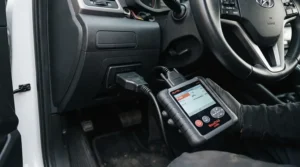
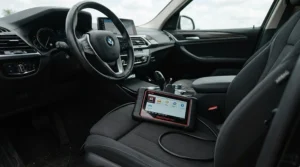
Every other product on this list is a standalone handheld unit; the Vgate iCar Pro BLE 4.0 is different by design, and that difference is its whole appeal. This is a Bluetooth Low Energy dongle roughly the size of a car key fob that plugs into the OBD2 port and pairs with your smartphone, letting free apps like Car Scanner or Torque do the heavy lifting on a screen you already own and already find easy to read.
Here’s what most people searching for a budget bluetooth OBD2 scanner get wrong first time: classic Bluetooth 3.0 ELM327 dongles notoriously refuse to pair reliably with iPhones because of Apple’s Bluetooth restrictions. The Vgate iCar Pro BLE 4.0 solves that specific headache by using genuine Bluetooth Low Energy (BLE) 4.0, which iOS handles properly — so if you’ve been burned by a cheap dongle that simply won’t show up in your iPhone’s Bluetooth list, this is the fix. It also includes an auto-sleep function that all but eliminates the parasitic battery drain some dongles cause when left plugged in permanently, protecting your car battery over winter.
Pros:
- ✅ Genuinely reliable iPhone and Android compatibility
- ✅ Auto-sleep function protects your car battery long-term
- ✅ Uses your phone’s larger, familiar screen instead of a tiny LCD
Cons:
- ❌ Requires a separate app download and initial pairing setup
- ❌ No standalone display if your phone battery dies
Sitting near the £25-£30 ceiling of this list, it’s the clear choice for anyone who has already decided they’d rather use their phone than carry another gadget.
7. MOTOPOWER MP69033 Pro — only pick with a built-in battery tester
Rounding out the list at very nearly the £30 ceiling is the MOTOPOWER MP69033 Pro, and its standout feature is doing double duty: it’s both a code reader and a 12V battery and alternator tester in one housing. This matters more than it might first appear, because flat batteries are consistently one of the most common UK breakdown causes once autumn temperatures drop, and a garage will typically charge £20-£30 just for a standalone battery health check — roughly the entire price of this device.
The battery-test side measures voltage, cranking performance, and alternator output, with live ripple analysis designed to flag failing diodes before they leave you stranded (though, sensibly, MOTOPOWER notes results can vary with temperature and vehicle age, so treat it as a strong early warning rather than a certified pass/fail). On the diagnostic side, it retains the same code-reading, freeze-frame, and I/M readiness functions as the standard MOTOPOWER MP69033, upgraded to a 2.8-inch TFT colour screen and a faster processing chip. Aggregated reviews sit comfortably in the 4-to-4.5-star range, with the two-in-one functionality repeatedly cited as the reason buyers chose it over a plain code reader at a similar price.
Pros:
- ✅ Combines engine diagnostics and battery/alternator testing
- ✅ Colour TFT screen is noticeably easier to read than mono LCDs
- ✅ Saves a separate £20-£30 garage battery-check fee
Cons:
- ❌ Sits right at the £30 ceiling, leaving little price buffer
- ❌ Battery test is indicative, not a certified diagnostic result
For anyone who’s ever been caught out by a car that clicks but won’t start on a frosty morning, this is the most practically well-rounded option on the list.
MOT Preparation: Your Step-by-Step Pre-Test Scanning Guide
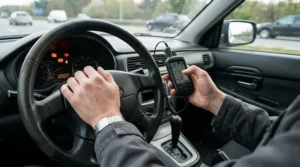
MOT preparation is arguably the single best reason to own a budget scanner, because an illuminated engine management light is an automatic major-fault failure under DVSA’s MOT testing rules — regardless of how minor the underlying issue actually is. Here’s the practical sequence that turns a £20-£30 scanner into genuine MOT insurance rather than a novelty gadget:
First, plug in and scan roughly a week before your test date, giving yourself enough runway to actually get something fixed. Second, read every code shown, not just the one triggering the dashboard light — pending codes can indicate a fault that hasn’t fully surfaced yet but easily could during the emissions portion of the test. Third, look up common culprits before panicking: codes like P0420 (catalyst efficiency) or P0171 (system too lean) are frequently caused by inexpensive fixes such as a loose fuel cap, a perished vacuum hose, or a worn oxygen sensor rather than anything catastrophic. Fourth, only clear a code once you’ve genuinely addressed the underlying cause — clearing it to “hide” the light for the test is pointless, since a hard fault will simply re-trigger the light within a handful of drive cycles, often before the tester even gets the car on the ramp.
A cheap OBD2 scanner earns its keep here even if you never use it for anything else all year: a single MOT failure for an emissions-related fault can mean a re-test fee plus the actual repair cost, whereas a five-minute check at home costs nothing beyond the price of the device you already own.
Entry-Level Car Maintenance: Three Real-World Buyer Scenarios
Entry-level car maintenance looks different depending on who’s holding the scanner, so let’s put some real faces on the buying decision rather than leaving it abstract.
Take a university student commuting eight miles to campus in a 2012 Ford Fiesta bought secondhand for £2,500. Budget is the overriding constraint, and reliability anxiety is real — any dashboard light feels like impending doom on a student income. For this buyer, the MOTOPOWER MP69033 or LAUNCH Creader CR3001 makes the most sense: both sit comfortably under £20, need no smartphone data allowance to operate, and answer the one question that actually matters — “is this serious, or can it wait until payday?”
Now consider a family running a seven-year-old estate car for the school run and weekend trips, where a breakdown isn’t just inconvenient but genuinely disruptive to childcare logistics. Here, the MOTOPOWER MP69033 Pro with its built-in battery tester earns its slightly higher price, because catching a failing alternator or weak battery before a cold Monday morning prevents the single most common cause of family-car breakdowns during autumn and winter.
Finally, picture a confident DIYer who already changes their own oil and brake pads and wants a tool that grows with their skills rather than one they’ll outgrow within a year. The ANCEL AD310 is the obvious fit, since its live-data graphing gives genuine diagnostic depth — the ability to actually watch a sensor value change in real time — that the purely code-reading options on this list simply don’t offer.
Common Problems a Cheap OBD2 Scanner Can Actually Solve
A cheap OBD2 scanner won’t fix a car by itself, but it solves a specific, recurring set of frustrations that would otherwise mean guessing or paying for a diagnosis you could have done yourself.
Problem one: the check engine light comes on for no obvious reason. Solution: scan immediately rather than driving around worrying for a fortnight — most codes point to something specific and often inexpensive, such as an oxygen sensor or a loose fuel cap.
Problem two: you’ve just done a repair and want to confirm it worked. Solution: clear the stored code with the scanner and drive normally for a day or two; if the light stays off, the fix held, and if it returns, you know immediately rather than after another garage bill.
Problem three: you’re buying a secondhand car and the seller claims “it’s nothing serious.” Solution: plug in before you commit to buying — a scanner with VIN retrieval, like the Autel MaxiScan MS309, can also confirm the ECU actually matches the vehicle’s paperwork.
Problem four: your MOT is imminent and you’re anxious about an emissions fault. Solution: follow the MOT preparation sequence above rather than hoping for the best.
Problem five: your car won’t start on a cold morning and you don’t know if it’s the battery. Solution: a combination unit like the MOTOPOWER MP69033 Pro answers that question in under a minute, without needing to borrow jump leads from a neighbour first.
How to Choose OBD2 Scanners Under £30
Choosing between OBD2 scanners under £30 comes down to seven practical criteria, each worth weighing against how you’ll actually use the device rather than how impressive its spec sheet looks.
- Confirm your vehicle’s age and fuel type first. Every scanner here supports standard OBD2/EOBD, but pre-2001 petrol or pre-2004 diesel vehicles may need a different, non-standard connector entirely.
- Decide between a wired handheld and a Bluetooth dongle. Handhelds like the ANCEL AD310 need no app and work the moment they’re plugged in; dongles like the Vgate iCar Pro BLE 4.0 rely on a paired phone but use a screen you already find comfortable.
- Check for live-data support if you’re chasing an intermittent fault. Only the ANCEL AD310 on this list graphs live parameters, which matters enormously if a code keeps reappearing without an obvious trigger.
- Look for genuine iOS compatibility if you’re buying a Bluetooth model. Classic ELM327 Bluetooth 3.0 dongles frequently fail to pair reliably with iPhones; BLE 4.0 models like the Vgate iCar Pro BLE 4.0 solve this specifically.
- Weigh up bundled extras against a slightly higher price. The battery-testing function on the MOTOPOWER MP69033 Pro can offset the cost of a separate garage check within a single use.
- Check warranty length, not just price. The three-year cover on the LAUNCH Creader CR3001 is unusually generous for this price bracket and worth factoring into value calculations.
- Read aggregated review sentiment for your specific make, not just the overall star rating. Compatibility gaps (like the Citroën/Peugeot limitation noted on the LAUNCH Creader CR3001) are often make-specific rather than universal flaws.
Budget Bluetooth OBD2 Scanner vs Wired Code Readers
The budget bluetooth OBD2 scanner category and the traditional wired handheld category solve the same core problem in fundamentally different ways, and picking between them is really a question of how you prefer to interact with information rather than which is objectively “better.”
A wired handheld like the MOTOPOWER MP69033 or ANCEL AD310 works the instant it’s plugged in — no app, no pairing, no risk of a dead phone battery leaving you unable to read a code. That immediacy is genuinely valuable when you’re stood in a cold car park trying to work out whether it’s safe to drive home. A budget bluetooth OBD2 scanner such as the Vgate iCar Pro BLE 4.0, by contrast, trades that plug-and-play simplicity for a larger, more familiar screen, the ability to log and graph data over time using a proper app interface, and the convenience of never having to store a separate handheld device at all.
Here’s the trade-off most comparison articles skip: Bluetooth dongles depend entirely on your phone having charge and the relevant app installed before you actually need it, which is precisely the moment you’re least likely to have thought ahead. Reviewers consistently note that classic Bluetooth dongles without BLE also struggle with iPhone pairing, which is why the genuine BLE 4.0 support on the Vgate iCar Pro BLE 4.0 specifically matters rather than being a throwaway spec line. If you want zero setup friction, buy a handheld; if you want a richer interface and don’t mind five minutes of app setup once, the Bluetooth route pays off.
Basic Diagnostic Tools for First-Time Buyers and Beginners
Basic diagnostic tools can feel intimidating on a specification sheet crowded with acronyms like “I/M readiness” and “freeze frame,” so here’s the beginner-friendly version of what actually matters when you’re buying your first one.
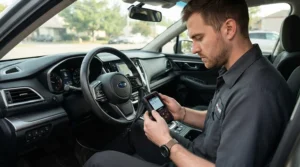
You genuinely don’t need to understand every OBD2 protocol abbreviation to use a scanner successfully — plug it in, turn the ignition to the “on” position (engine off is usually fine, some models want the engine running), and press the single “read codes” button most of these devices default to. The MOTOPOWER MP69033 and LAUNCH Creader CR3001 were both specifically praised in aggregated reviews for onscreen prompts that walk a total beginner through the process without requiring a manual. Where beginners most often go wrong isn’t reading the code — it’s what they do next, either panicking over a minor code or, worse, clearing a serious one repeatedly without ever getting it looked at.
A sensible first-30-days routine looks like this: scan once when the tool arrives just to see a baseline “no codes stored” reading, so you know the device works before you actually need it in an emergency; keep the scanner permanently in the glovebox rather than a cupboard at home; and resist the urge to clear every code the moment you see one — write it down first, and give yourself five minutes to look up what it actually means. Most manufacturer-specific fault code lookups are freely available online, and cross-referencing a code before clearing it turns a basic diagnostic tool from a mysterious gadget into genuinely useful, informed decision-making.
Common Mistakes When Buying OBD2 Scanners Under £30
The single most common mistake is assuming every scanner under £30 does the same job, then feeling disappointed when a device bought purely on price can’t graph live data or won’t pair with an iPhone — capabilities that were never advertised in the first place. Read the actual feature list, not just the price tag.
A second frequent misstep is ignoring vehicle-specific compatibility notes buried in product descriptions, such as the Citroën and Peugeot limitation on the LAUNCH Creader CR3001. These aren’t universal flaws, but they’re make-specific gaps that matter enormously if it happens to be your car.
A third mistake, particularly with Bluetooth dongles, is buying a classic ELM327 3.0 unit for an iPhone household without checking for genuine BLE 4.0 support, then blaming the device when pairing fails repeatedly — it’s an iOS restriction, not a fault, and it’s avoidable by choosing a scanner like the Vgate iCar Pro BLE 4.0 built around it from the start.
Finally, many buyers clear a fault code the moment it appears without noting down what it was first. If the light returns — which it often will for a genuinely unresolved fault — you’ve lost the diagnostic information you actually needed and have to start the whole process again from scratch.
What to Expect: Real-World Performance
Specifications rarely translate directly into lived experience, so here’s what actually happens when you use one of these devices on a typical UK driveway rather than in a lab.
Connection speed is near-instant on every wired handheld tested here — plug in, ignition on, and codes appear within a few seconds on the MOTOPOWER MP69033, ANCEL AD310, and similar readers. Bluetooth pairing on the Vgate iCar Pro BLE 4.0 takes marginally longer the first time, typically under a minute, but subsequent connections are automatic once the app remembers the device. Screen legibility in genuinely poor light — under a dashboard on a winter evening, say — favours the colour TFT screens on the MOTOPOWER MP69033 Pro, while the monochrome LCD units remain readable but less forgiving in low contrast.
Where real-world experience diverges most sharply from the spec sheet is accuracy on less common vehicles. Reviewers consistently report excellent reliability on mainstream European, Japanese, and Korean models, with occasional vaguer manufacturer-specific code descriptions on less common brands or older vehicles — a limitation that applies across nearly every device in this price bracket rather than being specific to any single one. None of these tools will diagnose ABS, airbag, or transmission faults; that ceiling is consistent across the entire category, and stepping past it means moving into the £85-£150 enhanced-scanner bracket entirely.
Long-Term Cost & Maintenance: Is a Cheap OBD2 Scanner Worth It?
The value maths on a cheap OBD2 scanner is straightforward enough that it barely needs a table, but here’s one anyway because the numbers are genuinely persuasive.
| Approach | Typical One-Off Cost | Ongoing Value | Best For |
|---|---|---|---|
| Garage diagnostic scan | £30-£100 per visit | None — pay again every time | Complex faults needing specialist tools |
| Cheap OBD2 scanner | Under £30, once | Reusable indefinitely | Recurring engine-light checks, MOT prep |
| Doing nothing and hoping | £0 upfront | Risk of a failed MOT or worse repair bill | Nobody, honestly |
A single garage diagnostic visit typically costs £50-£120 depending on region and garage type, according to widely cited UK motoring guidance — meaning that most of the seven scanners on this list pay for themselves the very first time you use them instead of booking a check-engine-light appointment. Beyond that first use, there’s no subscription, no per-scan fee, and (with the exception of registering for firmware updates on some models) no ongoing cost at all. The genuine long-term maintenance consideration is simply keeping the device’s software current where updates are offered, since fault code libraries do occasionally expand to cover newer vehicles.
Total cost of ownership over, say, five years of casual use is essentially the purchase price and nothing more — which is a rare thing to be able to say honestly about any car-related purchase.
Features That Actually Matter (And Those That Don’t)
Marketing copy on budget scanner listings loves to list every conceivable feature, but not all of them carry equal real-world weight, so here’s an honest filter.
Features that genuinely matter: broad protocol support covering your vehicle’s age and origin, a clear and legible screen (colour helps but isn’t essential), reliable code-clearing that doesn’t require repeated attempts, and — if you’re chasing an elusive fault — live-data capability like that on the ANCEL AD310. Genuine iPhone compatibility matters enormously if you’re considering a Bluetooth model at all, which is precisely why BLE 4.0 support is worth paying attention to rather than skimming past.
Features that matter far less than the marketing suggests: claimed support for “10,000+ vehicle models,” which is essentially true of every OBD2-compliant scanner by definition of the standard itself; multi-language menus beyond English, unless you specifically need them; and headline “professional-grade” branding language on a sub-£30 device, since no scanner in this bracket genuinely replaces a workshop tool for ABS, airbag, or transmission diagnostics. Filtering out the noise leaves a much shorter, much more useful decision list than the product listings themselves suggest.
Safety and Compliance: What a Budget Scanner Won’t Tell You
Safety and regulatory compliance are worth a dedicated word, because a budget scanner’s simplicity is also its boundary. Under UK MOT rules, an illuminated engine malfunction indicator lamp is treated as a major defect on qualifying petrol vehicles first used from July 2003 and diesel vehicles from July 2008 onwards, regardless of how trivial the underlying code turns out to be — this is set out clearly in the official MOT inspection manual. None of the seven scanners here access ABS, airbag, or supplementary restraint system codes, which means a warning light for any of those safety-critical systems still requires a proper diagnosis by a garage — clearing it yourself without understanding the cause is genuinely risky rather than merely inconvenient.
It’s also worth noting that clearing a code doesn’t fix the underlying fault; it simply resets the indicator until the ECU logs the same problem again, which on a safety-related system could mean driving with reduced braking assistance or a disabled airbag without realising it. For anything beyond generic engine and emissions codes, a budget scanner’s honest answer is “I don’t know” — and treating that limitation seriously is the responsible way to use one.
FAQ
❓ Are OBD2 scanners under £30 accurate?
❓ Do I need an OBD2 scanner for my MOT?
❓ Will a cheap OBD2 scanner work on my iPhone?
❓ Can a budget OBD2 scanner damage my car?
❓ How do I find my car's OBD2 port?
Conclusion
Seven scanners, one shared job, and genuinely different personalities once you look past the price tag. If you want the cheapest reliable entry point, the MOTOPOWER MP69033 does exactly what it needs to and nothing more. If a warranty matters more than you’d expect, the LAUNCH Creader CR3001‘s three years of cover is a rare find under £20. Prefer a name you already trust from the high street? The Streetwize SWOBD delivers that familiarity without drama.
For most drivers weighing up OBD2 scanners under £30, though, the ANCEL AD310 remains the standout — live-data graphing simply isn’t available elsewhere in this price bracket, and that single feature genuinely changes what you can diagnose. The Autel MaxiScan MS309 is the pick if brand pedigree matters to you, the Vgate iCar Pro BLE 4.0 solves the specific and very real iPhone-pairing headache for smartphone-first users, and the MOTOPOWER MP69033 Pro earns its place for anyone who’d rather catch a failing battery in October than get stranded in December.
None of these will replace a proper garage diagnosis for anything beyond generic engine and emissions faults — and that’s fine, because that was never the job they were built for. What they will do is turn a mystery dashboard light into a five-minute answer, and for under £30, that’s a genuinely good trade.
Recommended for You
- Bluetooth OBD2 Scanner: 7 Best Picks Tested for UK Drivers (2026)
- Sat Nav for Lorry Drivers: 7 Best HGV Devices for 2026 (Tested Picks)
- 7 Best HUD Speed Display For Car Options in 2026 (Ranked)
Disclaimer: This article contains affiliate links. As an Amazon Associate, I earn from qualifying purchases. If you purchase products through these links, we may earn a small commission at no additional cost to you.
✨ Found this helpful? Share it with your friends! 💬🤗
