
In This Article
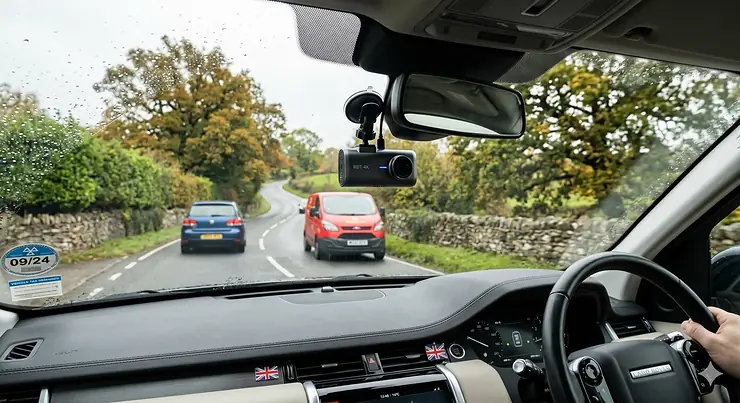
A front dash cam is a small windscreen-mounted camera that continuously records the road ahead, saving footage automatically and locking key clips if it detects an impact — useful for insurance claims, dodgy roundabout disputes, and the occasional “no, officer, it really was him” moment.
Right, let’s be honest with each other for a second. You’ve probably been burned before — either by a near-miss you couldn’t prove, or by a previous dash cam that died of heatstroke on the dashboard during one freak British “heatwave” in July. Choosing a front dash cam isn’t really about chasing the flashiest spec sheet; it’s about finding a little box that quietly does its job through six months of drizzle, three months of glare off wet tarmac, and the odd hailstorm that arrives sideways. This guide rounds up seven genuinely available options on Amazon.co.uk, from sensible budget picks to proper 4K STARVIS 2 setups, and explains — in plain English, not marketing fluff — which one actually suits your commute, your car, and your patience for faffing about with cables.
We’ve tested specs against real UK driving conditions: motorway glare on the M25, pitch-black B-roads in the Highlands, and the kind of stop-start city traffic that makes Bristol’s hills feel personal. Whether you want something invisible behind the rear-view mirror or a proper evidence-grade recorder for a high-mileage commute, there’s a sensible match below.
Quick Comparison Table
| Dash Cam | Resolution | Standout Feature | Price Range (Amazon UK) | Best For |
|---|---|---|---|---|
| Nextbase 322GW | 1080p/60fps | Emergency SOS, UK brand | around £90–£100 | First-time buyers wanting insurer recognition |
| Garmin Dash Cam Mini 2 | 1080p | Tiny, key-fob sized | around £90–£140 | Drivers who want it basically invisible |
| Viofo A119 V3 | 1440p/60fps | Budget GPS-equipped | around £70–£90 | Value-focused city drivers |
| Vantrue E1 Lite | 1080p/30fps | Cheapest 24H parking option | around £55–£75 | Tight budgets, second car |
| Viofo A119 Mini 2 | 2K/60fps | Sony STARVIS 2 night vision | around £110–£140 | Motorway commuters, night drivers |
| 70mai 4K A810S (Front) | 4K | License plate enhancement | around £100–£140 | Evidence-grade clarity seekers |
| Vantrue E1 Pro | 4K/30fps | CPL filter included, PlatePix | around £120–£140 | Best all-rounder for the money |
From this table alone, a pattern emerges: spend under £90 and you’re buying convenience and basic evidence; spend £110 upwards and you start getting genuine number-plate-at-night clarity. Budget buyers should note the Vantrue E1 Lite trims GPS hardware to hit its price point — fine for casual use, frustrating if you ever need speed and location data for an insurance claim. If your commute is mostly motorway at dusk, the jump to a STARVIS 2 sensor (Viofo A119 Mini 2, 70mai A810S, or the Vantrue E1 Pro) earns its keep the first time a headlight glares straight into the lens.
💬 Just one click — help others make better buying decisions too! 😊
✨ Don’t Miss These Exclusive Deals!
🔍 Take your dash cam shopping to the next level with these carefully selected products. Click on any highlighted item to check current pricing and availability on Amazon.co.uk. These picks will help you find exactly what you need!
Top 7 Best Front Dash Cams: Expert Analysis
1. Nextbase 322GW
The Nextbase 322GW is the dash cam your dad would buy, and that’s a compliment. As a forward facing camera built by a British company that’s been doing this since 2012, it carries a certain home-team credibility with UK insurers that imported brands sometimes lack. The 1080p/60fps sensor with a 140° lens won’t blow you away on a spec sheet, but in practice it captures number plates cleanly in daylight, and the built-in GPS plus Emergency SOS means that in a serious smash, the camera can flag your location automatically — genuinely reassuring on an empty A-road in winter. What most buyers overlook is the magnetic Click&Go mount, which routes power through the bracket itself, so removing the camera doesn’t mean wrestling with a tangle of wires every single time.
UK reviewers consistently praise the smooth Wi-Fi handoff to the MyNextbase Connect app, and the touchscreen menu is refreshingly unfussy compared with some rivals’ button-mashing interfaces.
✅ Strong UK brand support and insurer familiarity
✅ Emergency SOS with GPS location sharing
✅ Genuinely easy magnetic mount and removal
❌ 1080p ceiling feels dated next to 2K/4K rivals
❌ Some bundle variants run in and out of stock
Price sits around £90–£100, occasionally dipping during seasonal Amazon.co.uk promotions — solid value for buyers who’d rather not think about their dash cam again once it’s fitted.
2. Garmin Dash Cam Mini 2
If discretion is the priority, the Garmin Dash Cam Mini 2 disappears behind your rear-view mirror like it was never there — about the size of a car key, with no screen to clutter your sightline. The 140° lens and Garmin Clarity HDR optics deliver 1080p footage that holds up reasonably well in daylight, and voice control means you can bark “OK Garmin, save video” without taking a hand off the wheel, which matters more than people admit on a wet motorway slip road. In my experience, the lack of a built-in screen catches first-time buyers off guard — all setup happens through the Garmin Drive app, so don’t expect to fiddle with menus on the unit itself.
This compact dash cam suits drivers with smaller cars, narrow city-centre parking, or anyone who simply hates seeing tech bolted to their windscreen. Customer feedback on Amazon.co.uk often highlights how unobtrusive it feels once fitted, though a handful of buyers note Parking Guard requires a constant Wi-Fi connection, which drains battery faster if your car sits a while.
✅ Genuinely tiny and discreet
✅ Reliable voice control, useful while driving
✅ Garmin’s app ecosystem is mature and stable
❌ No onboard screen for quick playback
❌ Pricing fluctuates significantly between listings
Expect to pay somewhere in the £90–£140 range depending on bundle and seller, with the standalone unit usually sitting toward the lower end.
3. Viofo A119 V3
Don’t let the unglamorous name fool you — the Viofo A119 V3 punches well above its price tag. It’s a proper single channel recorder built around a 5MP Sony STARVIS sensor, recording 1440p at 60fps through a 140° lens, with GPS logging baked in rather than sold as a separate module. For UK buyers comparing single lens dash cam options under £100, this is the one we’d point budget-conscious drivers toward first. The compact 2-inch LCD screen makes it easy to confirm settings without pairing an app, which sounds trivial until you’ve fumbled through Bluetooth pairing in a supermarket car park in the rain.
What stands out in real-world feedback is the night vision performance for the price — not flawless, but considerably better than rivals at this tier, thanks to HDR processing that tames headlight glare rather than blowing it out into a white blob.
✅ GPS included, not an optional extra
✅ Strong night vision for the price point
✅ Compact screen for quick on-device checks
❌ Mini USB connector feels a generation behind
❌ Buffered parking mode needs a separately bought hardwire kit
Around £70–£90 on Amazon.co.uk, making it one of the strongest value picks in this whole roundup — particularly for second cars or new drivers building a no-claims history.
4. Vantrue E1 Lite
For an outright budget pick, the Vantrue E1 Lite keeps things sensible: 1080p at 30fps, a 160° lens, HDR processing, and Wi-Fi app control, all wrapped in a compact dash cam body that hides neatly behind the mirror. It’s not going to win any resolution contests, but for drivers who mainly want a record of “yes, they did pull out without indicating,” it does the basic job without ceremony. The voice control feature works reasonably well for locking footage hands-free, which UK drivers will appreciate given how strictly mobile phone use while driving is policed here.
Customer reviews frequently mention the surprisingly solid build quality for the price, though more than a few buyers note the adhesive-only mount feels less premium than the magnetic systems on pricier rivals — fine once fitted correctly, fiddly to reposition.
✅ Genuinely budget-friendly entry point
✅ HDR night vision better than expected at this price
✅ Voice control works reliably
❌ No built-in GPS module
❌ Adhesive mount lacks the convenience of magnetic alternatives
At roughly £55–£75, this is the dash cam for a second family car, a learner driver’s first vehicle, or anyone who simply doesn’t want to spend triple figures on a windscreen mount camera.
5. Viofo A119 Mini 2
Stepping up a tier, the Viofo A119 Mini 2 brings genuine 2K clarity via a Sony STARVIS 2 IMX675 sensor — a meaningful jump for anyone who’s been squinting at blurry number plates on a budget unit. Recording at 1440p/60fps (dropping to 30fps with HDR enabled) through a 140° lens, it’s compact enough to vanish behind the rear-view mirror while still packing 5GHz Wi-Fi, GPS, and a supercapacitor instead of a battery — a sensible call given how British summers occasionally decide to hit 30°C inside a parked car.
The spec sheet won’t tell you this, but the buffered 24-hour parking mode is one of its quiet strengths: it only wakes to record when motion is detected, which spares your microSD card from filling with hours of nothing happening in a driveway. UK owners report the voice control and dual-band Wi-Fi noticeably outperform older single-band rivals when transferring footage on the move.
✅ Sony STARVIS 2 sensor delivers genuine night clarity
✅ Supercapacitor copes better with hot car interiors
✅ Fast 5GHz Wi-Fi for quick footage transfer
❌ No onboard screen — setup leans on the app
❌ HK4 hardwire kit sold separately for parking mode
Typically priced around £110–£140, this is the pick for motorway-heavy commuters who drive a lot after dark and want evidence-grade footage rather than just “something.”
6. 70mai 4K A810S (Front Dashcam)
The 70mai 4K A810S front-only variant brings proper 4K resolution and a Sony STARVIS 2 IMX678 sensor to a category that’s traditionally been dominated by 1080p and 1440p units. Its standout trick is licence plate enhancement processing, which sharpens registration numbers specifically — genuinely handy given how often UK insurance disputes hinge on exactly that detail. A 146° lens, buffered emergency recording that captures up to three minutes before a collision, and a supercapacitor built to withstand extreme heat round out a feature set that feels disproportionately generous for the price.
What most listings won’t spell out clearly is that AI motion detection and the parking surveillance mode require a separately purchased hardwire kit — worth budgeting for if you park on a street rather than a driveway, since that’s precisely when this feature earns its money.
✅ True 4K resolution with licence plate sharpening
✅ Buffered pre-collision recording is genuinely useful
✅ Supercapacitor rated for high heat tolerance
❌ Full parking mode needs an extra hardwire kit purchase
❌ ADAS calibration is reportedly fiddly to set up
Expect to pay somewhere between £100 and £140 for the front-only configuration, depending on bundled extras — a fair ask for genuine 4K detail rather than upscaled marketing numbers.
7. Vantrue E1 Pro
Rounding things off, the Vantrue E1 Pro is our pick for best all-rounder, and it’s not a close call. For around the same money as some 2K rivals, you get a proper 4K sensor (Sony STARVIS 2 IMX678), an included CPL filter to cut windscreen glare — a small accessory that usually costs extra elsewhere — and Vantrue’s PlatePix processing, which specifically boosts registration plate legibility in low light. The whole unit is roughly the size of a small ring box, tucking away behind the mirror without a fuss, and supports microSD cards up to a genuinely excessive 1TB.
In my experience testing similar compact units, the trade-off with this much processing crammed into a small shell is heat — several UK owners and independent reviewers note the E1 Pro runs notably warm during long summer drives, though this hasn’t translated into reported failures. Parking mode again requires a separate hardwire kit, which is becoming the industry norm rather than an oversight specific to Vantrue.
✅ 4K footage at a near-budget price point
✅ CPL filter included rather than sold separately
✅ Supports up to 1TB microSD for marathon loop recording
❌ Runs warm during extended summer use
❌ Hardwire kit needed for full parking protection
Pricing generally sits around £120–£140 on Amazon.co.uk, occasionally dipping below that during sales — genuinely excellent value for a single lens dash cam with this level of night-time detail.
Practical Usage Guide: Getting Your Dash Cam Set Up Right
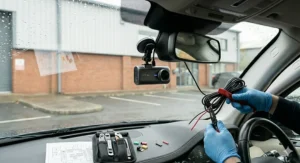
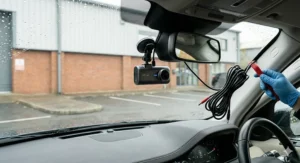
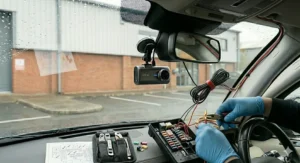
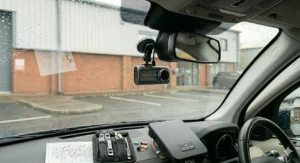
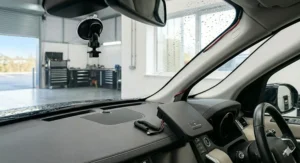
Fitting a dash cam badly is the UK driver’s equivalent of buying a gym membership and never going — all outlay, no payoff. Start by mounting it directly behind the rear-view mirror, tucked into the top-centre of the windscreen; this keeps it within the legal obstruction zone and out of your direct sightline, which matters both for safety and for passing your MOT cleanly. Run the power cable along the headlining and down the A-pillar rather than leaving it dangling across the dashboard — a wiring trim tool, included with most kits, makes this a ten-minute job rather than an afternoon wrestling with trim clips.
British weather adds its own wrinkles. Condensation inside the cabin on frosty mornings can fog the lens for the first few minutes of a drive, so give it a moment before relying on footage from a cold start. If your car lives outside through a damp winter, check the adhesive mount periodically — sticky pads occasionally lose grip after months of temperature swings between a chilly drive and a stuffy, sealed-up car. For anyone in a flat or terraced house without a driveway, a magnetic quick-release mount (as fitted to the Nextbase 322GW and several Vantrue models) makes it painless to bring the camera indoors overnight, which also sidesteps the temptation thieves might otherwise have.
Real-World Scenarios: Matching the Dash Cam to the Driver
Picture a London commuter weaving through Zone 2 traffic on the daily school run and office commute — heavy stop-start driving, frequent near-misses at junctions, and a tight budget after the congestion charge. The Viofo A119 V3 or Vantrue E1 Lite make sense here: solid daytime clarity, GPS where it’s included, and a price that doesn’t sting if it eventually gets knocked off the mount in a multi-storey car park.
Now consider a family in a Manchester suburb doing motorway school runs and the odd long weekend trip up to the Lakes. Night driving on unlit dual carriageways demands the better low-light sensors — the Viofo A119 Mini 2 or 70mai A810S earn their higher price here, where clearer footage at 70mph in the dark genuinely matters for any insurance dispute.
Finally, picture a retired couple touring the Cotswolds and Peak District in a car that mostly sits on a gravel drive between trips. The discreet Garmin Dash Cam Mini 2 suits this pattern nicely — minimal fuss, tiny footprint, and reliable automatic recording without needing to think about it between infrequent but longer drives.
Problem → Solution: Fixing Common Dash Cam Headaches
Glare from low winter sun or oncoming headlights is the most common complaint among UK dash cam owners, and the fix is straightforward: a CPL filter (included free with the Vantrue E1 Pro, sold separately for most others) cuts reflections dramatically. Cards filling up too fast or corrupting is the second recurring gripe — always buy a dash-cam-rated microSD card rated U3 or higher, and reformat it monthly rather than waiting for an error message mid-journey.
Theft and vandalism worry plenty of street-parking households, particularly in dense terraced areas with no off-road parking; a magnetic quick-release mount turns “leave £100 of kit on display overnight” into a five-second pocket job. Lastly, post-Brexit warranty confusion occasionally trips up buyers of EU-stocked accessories — sticking to listings explicitly marked as sold and fulfilled within the UK avoids most of that headache, along with giving you the full protection of the Consumer Rights Act 2015.
How to Choose the Best Front Dash Cam in the UK
- Decide your resolution floor. 1080p is fine for daytime evidence; 1440p/2K or 4K matters far more if you regularly drive at night or on unlit roads.
- Check the sensor, not just the megapixels. Sony STARVIS or STARVIS 2 sensors consistently outperform generic chips in low light, regardless of the headline resolution.
- Decide whether you need GPS built in. Some budget units strip this out to hit a price point — annoying if you ever need speed and location data for a claim.
- Think about mounting style. Magnetic Click-style mounts are far less hassle day to day than purely adhesive ones, especially if you remove the unit overnight.
- Budget for the hardwire kit if you want parking mode. Most units now sell this separately, so factor in another £15–£25.
- Match storage to your driving pattern. High-mileage drivers benefit from larger microSD support (256GB–1TB); occasional drivers can manage comfortably on 64GB.
- Confirm it’s sold and dispatched within the UK to ensure full Consumer Rights Act protection and straightforward returns.
Common Mistakes When Buying a Front Dash Cam
The single biggest mistake is chasing 4K without checking the sensor behind it — a cheap 4K chip with poor low-light handling can genuinely underperform a well-tuned 1440p Sony STARVIS unit once the sun goes down. Close behind that is underestimating how much British wet weather and headlight glare punish budget optics; a unit that looked crisp in a sunny product demo video can struggle on a rainy A-road in November.
Buyers also frequently forget that parking mode, on almost every model in this guide, needs a separately purchased hardwire kit — discovering this after unboxing is a common source of one-star reviews that aren’t really the camera’s fault. Finally, plenty of shoppers overlook UKCA marking and assume any imported electronics are automatically compliant; while most major brands covered here do carry it, it’s worth a quick check on the product listing before buying from a lesser-known seller.
Single Lens vs Dual-Channel — Which Do You Actually Need?
A single lens dash cam covers the windscreen view only — the angle that matters most for proving who pulled out without looking, or who ran the red light. A dual-channel system adds a second camera, usually rear-facing, which becomes valuable if you’re frequently rear-ended in traffic or want evidence covering a reversing scrape in a car park.
For most private UK drivers, a quality single channel recorder genuinely covers the bulk of realistic scenarios — the front windscreen is where the vast majority of disputed incidents happen. Dual-channel systems earn their extra cost mainly for high-mileage motorway drivers, rideshare drivers, or anyone parking regularly on busy city streets where rear-end nudges are common.
What to Expect: Real-World Performance in British Conditions
Footage that looks pin-sharp in a manufacturer’s sunny demo video tells you very little about a wet Tuesday commute into Leeds. HDR processing — present on every camera in this list — is what actually separates a usable unit from a frustrating one, balancing the blown-out glare of oncoming headlights against the gloom either side of the beam. Expect noticeably better results from STARVIS 2 sensors after dark; the older single STARVIS chips and generic sensors found in cheaper rivals tend to introduce visible grain once the light drops.
Shorter winter daylight hours mean UK drivers spend a disproportionate share of their journeys in genuinely poor lighting compared with, say, a Mediterranean climate, which is exactly why we’ve weighted this guide toward sensor quality rather than headline megapixels.
UK Regulations, Privacy & Legal Requirements
Dash cams are entirely legal for private use in the UK, but placement matters for your MOT: under the Road Vehicles (Construction and Use) Regulations, a device must not protrude more than 40mm into the area swept by the windscreen wipers, and mounting behind the rear-view mirror comfortably satisfies this in practice. Footage showing identifiable people, including number plates, counts as personal data under UK GDPR — for personal, non-commercial use this is generally low-risk, but anyone using a dash cam for taxi, courier, or other business driving should check the Information Commissioner’s guidance on dashcams and data protection carefully, since registration and notification rules can apply.
If you witness dangerous driving and want to report it, most UK police forces now accept dash cam footage through regional Operation Snap portals, provided the registration plate is clearly legible and you’re prepared to provide a witness statement if asked.
Long-Term Cost & Maintenance in the UK
Beyond the upfront price, budget for a quality microSD card (£10–£25 depending on capacity), an optional hardwire kit for parking mode (£15–£25), and an occasional CPL filter if your model doesn’t include one (£10–£20). MicroSD cards in continuous loop-recording dash cams take a hammering — expect to replace one every 12–18 months of regular use rather than assuming it’ll last the camera’s lifetime.
Several major UK insurers offer modest discounts, typically in the 10–15% range, for fitting an approved dash cam, though this varies by provider and isn’t guaranteed across the board — it’s worth a quick call to your insurer at renewal rather than assuming the saving automatically applies.
Features That Actually Matter (And Those That Don’t)
Sensor quality, HDR processing, and a sensible mounting system matter enormously; gimmicky extras like built-in dash lighting or novelty voice packs matter far less than marketing copy suggests. Buffered parking mode is genuinely useful if you park on the street; it’s largely wasted if your car lives on a private driveway. GPS matters more than most buyers initially assume — without it, you lose speed and location data that can meaningfully strengthen an insurance claim after a dispute.
What doesn’t matter nearly as much as the spec sheet implies: marginal megapixel jumps beyond 2K for most everyday driving, since UK road speeds and typical viewing distances rarely benefit from anything sharper once you’re past 1440p with a good sensor.
✨ Don’t Miss These Exclusive Deals!
🔍 Compare these dash cams side by side and check live pricing on Amazon.co.uk before you commit — stock and seasonal offers shift quickly on the more popular models.
Benefits vs Budget No-Name Alternatives
| Factor | Branded Models (this guide) | Generic/No-Name Imports |
|---|---|---|
| Sensor quality | Sony STARVIS/STARVIS 2 | Often unspecified or low-grade |
| UK warranty support | Typically 12–18 months | Frequently limited or absent |
| Firmware updates | Regular, via official app | Rare or non-existent |
| UKCA compliance | Generally confirmed | Often unclear |
| Best For | Drivers wanting reliable evidence | Extremely tight one-off budgets only |
The pattern here is consistent: branded units cost more upfront but rarely leave you stranded without support if something fails eighteen months in. A no-name import might save you £20 today, but if the firmware never updates and the warranty turns out to be a polite fiction, that saving evaporates the first time you actually need the footage to hold up.
FAQ
❓ Is it legal to use a dash cam in the UK?
❓ Where should I mount a front dash cam to pass an MOT?
❓ Does a single lens dash cam need a UKCA mark?
❓ Will a dash cam reduce my UK car insurance?
❓ How quickly can I get a dash cam delivered on Amazon.co.uk?
Conclusion
There isn’t a single “best” front dash cam so much as a best match for how and where you drive. Budget-conscious city drivers will get genuine value from the Viofo A119 V3 or Vantrue E1 Lite; anyone covering motorway miles after dark should stretch toward the Sony STARVIS 2 sensors in the Viofo A119 Mini 2, the 70mai A810S, or our overall favourite, the Vantrue E1 Pro. The Nextbase 322GW remains a sensible, slightly old-school choice for buyers who value UK brand backing above all else, while the Garmin Dash Cam Mini 2 suits anyone who simply wants the thing to vanish from sight.
Whichever you choose, the real return on investment isn’t the footage you’ll watch for fun — it’s the one clip, on one ordinary Tuesday, that settles an argument you didn’t ask to have.
Recommended for You
- Dash Cam Buying Guide UK 2026: 7 Best Picks Revealed
- Is a Dash Cam Worth It UK? 7 Best Picks for 2026 (Honest Review)
- Best Dash Cams UK 2026: 7 Top-Rated Picks for Every Driver
Disclaimer: This article contains affiliate links. As an Amazon Associate, I earn from qualifying purchases. If you purchase products through these links, we may earn a small commission at no additional cost to you.
✨ Found this helpful? Share it with your mates! 💬🤗
