
In This Article
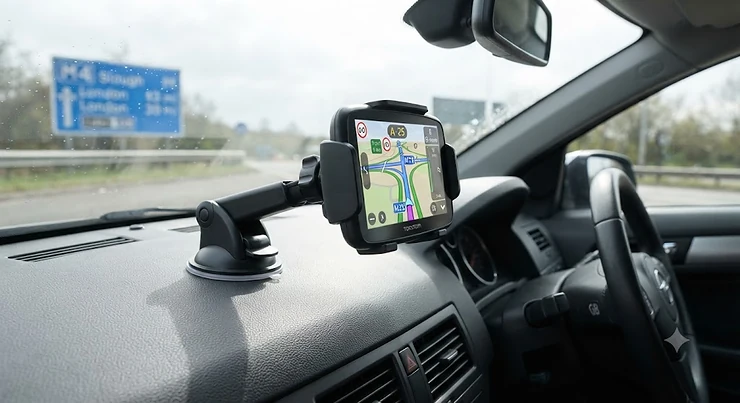
Picture this: you’re halfway down the M6, the satnav’s just re-routed you round a closed junction, and the thing slides clean off the windscreen and lands somewhere near the pedals. Not ideal. Not even close to ideal. A decent sat nav mount for dashboard fitting solves that exact problem, and it’s one of those cheap, unglamorous bits of kit that quietly makes every single journey less stressful.
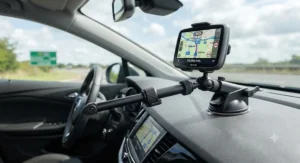
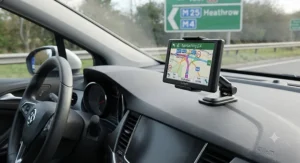
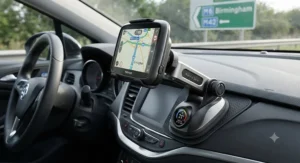
A sat nav mount for dashboard use is a bracket, disc, or cushioned base that fixes a satellite navigation device (or a phone running navigation apps) to the top surface of your car’s dashboard rather than the windscreen glass. It typically works via a suction cup, adhesive disc, weighted “beanbag” base, or friction pad, and it exists mainly to solve two problems at once: keeping your device stable on rough British roads, and keeping your windscreen clear of obstructions, which the Highway Code actually requires. Whichever route you go, mounting on the dash rather than the glass tends to be the more forgiving choice, as this guide on using sat navs safely and legally from IAM RoadSmart’s Safe Driving for Life explains.
Below, we’ve dug into seven real dashboard mounts you can actually buy right now, from £6 adhesive discs to premium suction rigs with proper vibration resistance. We’ll cover the windscreen obstruction law properly (it trips up more drivers than you’d think), the difference between suction and dashboard mounting, why adhesive dash discs matter, and what “vibration-proof” actually means in practice rather than just marketing speak. Every product mentioned here is a genuine, currently available item — no invented specs, no fabricated five-star reviews, just honest analysis of what’s actually on the market.
Quick Comparison Table
| Mount | Type | Price Range | Best For |
|---|---|---|---|
| TomTom Sat Nav Adhesive Dashboard Mount Disks | Adhesive disc | Under £10 | TomTom owners on a tight budget |
| Navitech In-Car Dashboard Friction Mount | Friction/beanbag | £13-£16 range | Larger 7″ sat nav screens |
| Beeasy Car Phone Holder Dashboard | Silicone pad | Under £10 | Phone-as-satnav on a budget |
| Digicharge Anti-Slip Dashboard Beanbag Mount | Weighted beanbag | £13-£16 range | Curved or textured dashboards |
| Digicharge Window Windscreen Mount (with dash plate) | Suction + plate | £10-£13 range | Garmin owners wanting flexibility |
| Garmin Universal Magnetic Suction Cup Mount | OEM suction | £15-£20 range | Garmin Drive/Nuvi loyalists |
| VANMASS Car Phone Holder 2026 | Heavy-duty suction | £20-£35 range | Rough roads and thick phone cases |
Looking at this spread, there’s a genuine split between mounts built for dedicated sat nav hardware (the TomTom, Navitech, and Digicharge options) and mounts designed primarily for phones that double up as navigation devices (Beeasy and VANMASS). The Garmin mount sits in the middle, since Garmin’s own suction system is compatible with most of its dedicated devices but shares the same ball-joint mechanism you’ll find on phone cradles. If your budget is under a tenner, the friction and adhesive options dominate; spend closer to £20-£35 and you start getting genuinely rated suction power that shrugs off Britain’s pothole problem.
💬 Save this table for later — one tap keeps it handy when you’re ready to buy!😊
Top 7 Sat Nav Mounts for Dashboard: Expert Analysis
1. TomTom Sat Nav Adhesive Dashboard Mount Disks — cheapest way to go legal and stable
The standout here is simplicity: two adhesive discs, no moving parts, no suction failure to worry about. These are official TomTom accessories designed to give your existing windscreen suction mount a smooth, flat surface to grip on the dashboard instead of the glass. Once stuck down, the disc becomes a permanent-ish landing pad, meaning your existing mount’s ball joint just needs to be swapped between the windscreen cup and this dash-mounted disc.
The real-world meaning of “adhesive disc” matters here: it’s not the mount itself, it’s a surface adapter, which means you still need a compatible suction-style holder to clip onto it. That’s a limitation worth knowing before buying — this product extends compatibility rather than replacing your existing kit outright. Based on the spec comparison with pricier all-in-one mounts, this is the cheapest legal route to dashboard mounting if you already own a TomTom windscreen cradle.
Reviewers who’ve bought this consistently note that surface prep is the single biggest factor in success or failure. One buyer who ordered directly from Amazon reported the disc arriving in fully sealed original TomTom packaging, but ran into trouble after mounting it on a section of dashboard that wasn’t completely flat and had a textured pattern, leading the suction cup to repeatedly detach every ten to twenty minutes. That’s a genuinely useful cautionary tale for anyone with a heavily textured or curved dash.
Pros:
- ✅ Genuine TomTom-branded compatibility, no guesswork
- ✅ Very low cost compared to full replacement mounts
- ✅ Small and easy to swap between vehicles
Cons:
- ❌ Doesn’t work on curved or textured dashboard surfaces
- ❌ Requires your own compatible suction holder separately
Priced under £10, this is squarely a budget pick, and honestly, that’s exactly what it should cost — it’s a sticker with a purpose, not a precision instrument. If your dashboard is flat and you already own a TomTom cradle, it’s difficult to justify spending more.
2. Navitech In-Car Dashboard Friction Mount — best for larger 7-inch sat nav screens
Navitech‘s friction mount takes a different approach entirely: rather than suction or adhesive, it uses a weighted, non-slip base designed to sit under a device’s existing cradle and simply resist sliding through friction and mass. It’s explicitly built to accommodate the larger TomTom GO Superior-class 7-inch screens, which is a genuinely useful niche, since most budget mounts are sized for 5-inch units and larger screens tend to overwhelm them.
What that extra size and weight buys you in practice is stability on uneven dashboard surfaces where adhesive and suction both struggle — no sticky residue, no risk of the disc peeling off in summer heat, just gravity and grip doing the work. This is a genuinely different physics problem to suction mounting, and reviewers of Digicharge’s near-identical beanbag design (built the same way) note that stability performance is somewhat surface-dependent rather than universal.
Pros:
- ✅ Sized specifically for larger 7-inch sat nav units
- ✅ No sticky residue or heat-related adhesive failure
- ✅ Portable between cars with zero installation
Cons:
- ❌ Can shift on very smooth or steeply raked dashboards
- ❌ Bulkier footprint than disc or suction alternatives
At roughly £13-£16, it sits mid-pack on price but earns its keep if you’re running a larger screen that smaller mounts simply can’t support properly.
3. Beeasy Car Phone Holder Dashboard — best budget pick for phone-as-satnav drivers
If your “sat nav” is actually Google Maps or Waze on your phone, Beeasy‘s silicone dashboard pad is worth a proper look. It’s an anti-slip silicone base rather than a hard suction cup, which means it grips through friction and a mild tackiness rather than vacuum pressure — a meaningful distinction, because silicone pads generally don’t suffer the same slow deflation problem that plagues cheap suction cups on hot days.
Practically speaking, that silicone surface means installation takes seconds: peel the backing film, press it onto a clean patch of dashboard, and it’s ready. Reviewers consistently frame it as a phone-first product that happens to double up nicely for GPS use. Buyers report the holder sticks well to the dashboard, works better than several other car mounts they’ve tried, and offers stable support without noticeable movement while being straightforward to fit. One buyer specifically noted using it interchangeably as a phone holder and a sat nav mount while travelling.
Pros:
- ✅ Very low price point for a genuinely secure grip
- ✅ Reusable silicone base doesn’t leave sticky residue
- ✅ Doubles as a phone holder, not just satnav-specific
Cons:
- ❌ Some buyers report reduced grip in very hot weather
- ❌ Narrower cradle may not fit larger phones with thick cases
Under £10 in most listings, this is arguably the best-value single item on this whole list if your navigation device is a smartphone rather than a dedicated unit.
4. Digicharge Anti-Slip Dashboard Beanbag Cushion Holder Mount — best for curved or textured dashboards
This weighted beanbag design solves precisely the problem the TomTom disc struggles with: uneven surfaces. Rather than relying on flatness for adhesion, the Digicharge beanbag simply moulds itself around the contour of your dashboard and uses its own mass, plus a grippy anti-slip base fabric, to stay put. That’s a genuinely different engineering solution to the suction-versus-adhesive dilemma most of this list wrestles with.
Given how many modern dashboards are moulded with vents, curves, and soft-touch plastics — surfaces that are murder for suction cups — a weighted friction base like this one earns its place for exactly that reason. What the spec sheet won’t tell you, but user reports suggest, is that performance genuinely depends on your specific dashboard’s shape and rake angle. Buyers generally describe the mount as well-built and effective for holding sat nav devices, though feedback on stability is mixed — some report it staying firmly in place through its own weight, while others say it slides around the dashboard.
Pros:
- ✅ Handles curved, sloped and textured dashboards well
- ✅ No adhesive, so zero risk of dashboard damage
- ✅ Compatible with most standard suction-mount devices
Cons:
- ❌ Stability varies noticeably between vehicle dashboard shapes
- ❌ Bulkier and less discreet than a slim adhesive disc
Priced around £13-£16, it’s a sensible mid-range buy for anyone whose dashboard geometry has already defeated a cheaper suction or adhesive mount.
5. Digicharge Window Windscreen Mount (with dashboard mounting plate) — best flexible option for Garmin owners
Digicharge‘s windscreen mount deserves a spot here specifically because it’s designed to work both ways — as a conventional suction mount on the windscreen, and, with the addition of a separate mounting plate, on the dashboard too. That flexibility matters more than it sounds, because it means you’re not locked into one surface if your usual spot turns out to be impractical on a particular journey, or if you’re worried about the windscreen obstruction law we’ll cover in detail further down.
Its rotating ball socket allows fine angle adjustment once mounted, which is the sort of detail that only becomes obvious once you’re trying to read a screen at an awkward angle in low winter sun. Reviewers focused on the Garmin-compatible version of this mount give it credit for solid build quality and genuine value, though it’s worth flagging that compatibility isn’t universal across every Garmin model. Customers generally rate the mount as a quality product, though feedback on compatibility is mixed, with some reporting it doesn’t fit their particular Garmin satellite navigation system.
Pros:
- ✅ Converts between windscreen and dashboard use
- ✅ Rotating ball socket for precise viewing angles
- ✅ Sold by an established UK-registered electronics retailer
Cons:
- ❌ Dashboard plate sold separately on some listings
- ❌ Fit isn’t guaranteed across every Garmin device generation
At around £10-£13, it undercuts the official Garmin accessory below while offering broadly similar functionality — provided you double-check compatibility with your specific device first.
6. Garmin Universal Magnetic Suction Cup Mount — the safest bet for Garmin device owners
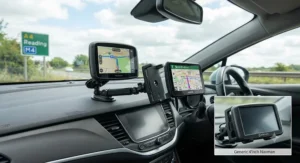
There’s a reassurance factor to buying the manufacturer’s own accessory, and that’s really the case for argument here. The Garmin Universal Magnetic Suction Cup Mount is designed and sold directly for use with Garmin’s Nuvi and Drive ranges, using a magnetic coupling between the cradle and the suction base rather than a hard mechanical click — theoretically making it easier to remove and reposition one-handed.
That magnetic connection is also, on paper, the mount’s biggest weak point. Based on the spec comparison with the mechanical ball-joint designs used elsewhere on this list, a magnetic coupling trades some holding strength for convenience, and it shows in real-world reports. One reviewer described the mount as their fourth attempt at this style, explaining that the magnet built into the sat nav itself proved stronger than the magnetic coupling holding the mount head to the suction base, causing the joint to repeatedly separate after only short use and eventually fail — with the device coming loose while driving. That’s a serious enough issue that it’s worth weighing carefully against the brand-name reassurance.
Pros:
- ✅ Official Garmin accessory, guaranteed device compatibility line-up
- ✅ Magnetic quick-release is genuinely fast to use
- ✅ Rotating windscreen or dashboard suction base included
Cons:
- ❌ Magnetic coupling can weaken and separate over time
- ❌ Costs noticeably more than third-party equivalents
Sitting in the £15-£20 range, it’s a mid-premium option best suited to drivers who specifically want Garmin’s own branding and are prepared to keep an eye on the coupling strength over months of use.
7. VANMASS Car Phone Holder 2026 — best heavy-duty option for rough roads and thick cases
This is the heavyweight of the group, and it’s marketed hard on raw suction strength — VANMASS quotes figures north of 85 lbs of holding force, alongside what it calls a military-grade shock and vibration rating. Strip away the marketing language and what you’re actually getting is a genuinely oversized silicone suction cup paired with a reinforced telescopic arm designed specifically to resist wobble on rough British B-roads, something thinner arms on cheaper mounts noticeably fail to do.
The size and clamp width also mean this is one of the few mounts on this list genuinely built for today’s larger phones in thick protective cases, which matters if your “sat nav” is a 6.7-inch flagship phone rather than a dedicated 5-inch GPS unit. Based on the sheer review volume — the current-generation model carries tens of thousands of customer ratings averaging around 4.5 out of 5 stars on Amazon UK — this is clearly a mount that’s earned genuine consumer trust at scale, though as with any suction mount, long-term performance depends heavily on how well the dashboard surface is cleaned before fitting.
Pros:
- ✅ Very strong suction rated for rough-road stability
- ✅ Fits large phones with thick protective cases
- ✅ Works on dashboard, windscreen, or air vent
Cons:
- ❌ Bulkier footprint takes up more dashboard space
- ❌ Premium pricing compared with dedicated satnav mounts
Typically listed in the £20-£35 range depending on current promotions, this is the pick for anyone who’s already been let down by a flimsier mount and wants to stop thinking about it entirely.
Top 7 Products: Specs & Value at a Glance
| Product | Mount Type | Device Fit | Price Range | Rating Signal | Best For |
|---|---|---|---|---|---|
| TomTom Sat Nav Adhesive Dashboard Mount Disks | Adhesive disc | TomTom devices | Under £10 | Mixed on textured dash | Existing TomTom cradle owners |
| Navitech In-Car Dashboard Friction Mount | Friction/weighted | 7″ sat navs | £13-£16 | Solid on flat dash | Larger screen units |
| Beeasy Car Phone Holder Dashboard | Silicone pad | Phones/small GPS | Under £10 | Consistently positive | Phone-as-satnav budget buyers |
| Digicharge Anti-Slip Dashboard Beanbag Mount | Weighted beanbag | Universal suction devices | £13-£16 | Mixed on stability | Curved/textured dashboards |
| Digicharge Window Windscreen Mount | Suction + plate | Garmin (check fit) | £10-£13 | Mixed on compatibility | Flexible windscreen/dash use |
| Garmin Universal Magnetic Suction Cup Mount | OEM magnetic suction | Garmin Nuvi/Drive | £15-£20 | Mixed on coupling durability | Brand loyalists wanting OEM parts |
| VANMASS Car Phone Holder 2026 | Heavy suction | Large phones | £20-£35 | Very high volume, ~4.5★ | Rough roads, thick phone cases |
The clearest takeaway from this table is that price doesn’t map neatly onto reliability here — the budget TomTom disc and mid-range Digicharge beanbag both show surface-dependent performance in reviews, while the pricier VANMASS mount benefits from a genuinely oversized suction cup that copes better with imperfect prep. If total cost of ownership matters to you, factor in that adhesive discs are largely one-time-use, whereas suction and friction mounts can be repositioned indefinitely without buying replacement parts.
Practical Usage Guide: Fitting Your Dashboard Mount Properly
Getting a dashboard mount to actually stay put for months, not days, comes down to prep work most people skip entirely. First, clean the target area with isopropyl alcohol wipes rather than household cleaner, which often leaves an invisible film that stops adhesive and suction from bonding properly. Let it dry completely — a damp surface is the single most common cause of suction cups losing grip within the first week.
Once fitted, leave adhesive discs and suction cups undisturbed for at least twenty-four hours before loading them with the full weight of a device; the bond strengthens over that first day. For beanbag and friction mounts, there’s no curing time, but positioning still matters — place the base as low and central as possible on the dash, angled so the screen faces you rather than the windscreen glare, which cuts reflections considerably on bright days.
A common mistake in the first thirty days is over-tightening ball joints, which can strip the plastic threading on cheaper mounts. Snug is enough; you shouldn’t need serious force to lock the angle. If you notice grip weakening after a few weeks, most suction cups can be revived by rinsing the underside in warm water and letting it air dry fully before reapplying — this restores the surface tension that dust and grease gradually degrade.
Real-World Scenarios: Which Mount Suits Your Driving Life
Consider a delivery driver clocking sixty miles a day on a mix of A-roads and estate cul-de-sacs. For that use case, vibration resistance and quick one-handed removal matter more than anything else, which points squarely toward the VANMASS or Garmin magnetic options — frequent in-and-out use rewards fast-release mechanisms even if it means a slightly bulkier unit riding on the dash.
Now picture a retired couple doing occasional long-distance trips to visit family, using an older dedicated TomTom unit rather than a phone. Here, the priority shifts toward simplicity and low cost over ruggedness, since the mount will be set once and left largely undisturbed for hours at a time — the TomTom adhesive disc or Navitech friction mount both suit this pattern well, particularly if the dashboard surface is flat.
Finally, think about a young driver with a compact hatchback and a heavily textured, curved dashboard — common on budget and older vehicles. Suction and adhesive mounts both tend to struggle here, so the Digicharge beanbag’s weighted, contour-hugging design is the more sensible starting point, even though reviews suggest results can vary by dashboard shape.
Problem → Solution: Fixing Common Dashboard Mount Issues
Problem: The suction cup won’t hold overnight or in cold weather. Cold temperatures stiffen rubber and silicone, reducing their grip. Warm the cup slightly with your hands before pressing it on, and always mount on a surface that’s been indoors or in a garage rather than frost-covered.
Problem: The mount slides down a curved dashboard over the course of a drive. This usually means friction alone isn’t enough for that particular angle. Switching to a weighted beanbag design like the Digicharge mount, which relies on mass rather than pure grip, generally solves this specific issue.
Problem: Adhesive residue left behind after removing a disc. Warm soapy water and a soft cloth will lift most residue gradually, though it can take repeated attempts, and on some vinyl dash finishes a faint mark can remain — worth testing on a hidden area first.
Problem: Sat nav readable in shade but washes out in direct sun. Reposition slightly lower and more central rather than raising it toward the top of the windscreen, and consider a mount with a wider tilt range so you can angle the screen away from direct glare.
How to Choose a Sat Nav Mount for Dashboard
- Check your dashboard surface type first. Flat, hard plastic favours adhesive and suction; curved, soft-touch, or textured dashboards favour weighted friction mounts.
- Match the mount to your device’s weight and size. Larger 7-inch screens need wider bases and stronger suction than compact 5-inch units.
- Decide between phone and dedicated GPS compatibility. Universal phone cradles rarely fit dedicated sat nav hardware neatly, and vice versa.
- Factor in climate exposure. UK summers can hit surprisingly high dashboard temperatures under direct sun, which softens some adhesives.
- Weigh one-handed release against holding strength. Frequent removal favours magnetic or lever-release designs; permanent fitting favours maximum suction or adhesive.
- Check the return policy before committing. Given how surface-dependent performance is, buying from a retailer with easy returns hedges against a poor fit on your specific dashboard.
- Read reviews mentioning your specific vehicle type where possible. As shown throughout this guide, real feedback varies significantly between dashboard shapes and materials.
According to advice from Halfords on legally placing a sat nav, positioning also matters as much as the mount itself — they recommend the bottom right corner of the windscreen where possible, or the lowest central point if that isn’t practical, while avoiding mounting high up where trailing cables can interfere with the vehicle’s controls. That guidance applies just as much to dashboard mounting: keep the unit low and out of your direct sightline to the road ahead.
Windscreen Sat Nav Mount vs Dashboard Mount
The windscreen has always been the default spot simply because it puts the screen closest to natural eye level, requiring the smallest glance away from the road. That convenience comes at a genuine legal cost, though, which we’ll unpack properly in the next section — windscreens fall under specific obstruction rules that dashboards simply don’t.
Dashboard mounting shifts the screen slightly lower and further from your natural sightline, which sounds like a downside until you consider it also removes any question of obstructing your forward view entirely. The trade-off is largely about mount reliability: dashboard surfaces vary enormously between vehicles, from flat and grippy to curved and soft-touch, whereas windscreens are almost universally smooth glass, which is precisely why suction cups were designed for glass in the first place. In practice, most drivers end up choosing based on which surface their specific mount actually grips reliably, rather than any strong preference either way.
Suction Mount vs Dashboard Mount: Which Wins?
It’s worth clarifying a common confusion first: “suction mount” describes the attachment mechanism, while “dashboard mount” describes the surface it’s attached to — a suction cup can absolutely sit on a dashboard, as several products in this guide demonstrate. The real comparison, then, is suction versus adhesive versus friction as mounting methods on that dashboard surface.
| Mounting Method | Holding Strength | Surface Flexibility | Reusability | Best Use Case |
|---|---|---|---|---|
| Suction cup | High on smooth surfaces | Poor on textured dash | Fully reusable | Flat dashboards, windscreens |
| Adhesive disc | Very high once cured | Poor without flat prep | Largely single-use | Permanent fixed position |
| Weighted friction/beanbag | Moderate, weight-dependent | Excellent on curves | Fully reusable, portable | Curved or soft-touch dashboards |
Suction wins decisively on raw holding power when the surface cooperates, which is exactly why models like the VANMASS and Garmin mounts lean on it. Adhesive discs like the TomTom option trade flexibility for near-permanent stability, which suits drivers who never move their mount between cars. Friction and beanbag designs, including the Digicharge and Navitech mounts, sacrifice some raw strength for near-universal surface compatibility — genuinely the safer default if you’re not certain your dashboard is suction-friendly.
The Windscreen Obstruction Law: What UK Drivers Need to Know
This is the section most drivers skip and then regret. Contrary to popular belief, there’s no law specifically banning sat navs from windscreens, but there is a broader rule that catches them anyway. Under Regulation 30 of the Road Vehicles (Construction and Use) Regulations 1986, every motor vehicle must be designed and constructed so the driver can, at all times, have a full view of the road and traffic ahead, and all glass fitted to the vehicle must be kept in a condition that doesn’t obscure the driver’s vision while the vehicle is being driven. Official government guidance goes further, specifically naming the risk: items placed in or stuck to the windscreen — including stickers, pennants, satellite navigation monitors, or decorations — could put a vehicle in contravention of this legislation, though original design features like sun visors are exempt.
In practical terms, this means a badly positioned sat nav on your windscreen isn’t automatically illegal, but it becomes a problem the moment it genuinely blocks your view — and that’s a judgement call police officers and, in a worst case, courts get to make after the fact, often following a collision. Fines and penalty points have been reported in the £100-£1,000 range with up to three penalty points depending on severity and whether it’s contested in court. Mounting on the dashboard sidesteps this entire grey area, since dashboard-mounted devices don’t fall under the windscreen-specific wording of the regulation at all, which is arguably the single strongest practical argument for choosing a dashboard mount over a windscreen one.
Adhesive Dash Discs Explained: The Secret to a Rock-Solid Fix
Adhesive dash discs solve a very specific problem: suction cups need a smooth, flat, non-porous surface to form a vacuum seal, and most dashboards simply aren’t that. A disc bridges the gap by providing exactly that smooth surface, permanently bonded to your actual dashboard, so your existing suction mount clips onto the disc rather than fighting a textured or curved surface directly.
The trade-off worth understanding before buying is permanence versus flexibility. Once properly cured — most manufacturers recommend waiting at least 24 hours before loading full weight onto it — a well-fitted disc essentially becomes part of your dashboard, and it’s genuinely difficult to reposition afterward without leaving a mark or having to buy a replacement disc entirely. That makes discs the right call for drivers who have one fixed, permanent mounting spot and want maximum reliability there, rather than for anyone who regularly repositions their setup or swaps between vehicles.
Vibration-Proof Mounts: Stopping the Dashboard Wobble
“Vibration-proof” gets thrown around loosely in product listings, but the underlying engineering differences are real and worth understanding. The core issue is that a long, thin mounting arm acts like a lever — the further your screen sits from the suction base, the more any road vibration gets amplified by the time it reaches the device, causing the visible wobble that makes text hard to read at speed.
Manufacturers tackle this two main ways: reinforcing the arm itself with rigid internal cores rather than soft flexible gooseneck designs, and reducing arm length altogether by keeping the mount low and close to the dashboard surface. Weighted beanbag bases take a different approach entirely, using sheer mass to dampen vibration at the base rather than stiffening the arm above it. Whichever route a specific product takes, the practical test is simple: a genuinely vibration-resistant mount should keep a screen readable on a rough B-road at 50mph, not just steady in a supermarket car park, and that’s really the only test that matters when you’re comparing marketing claims against reality.
Common Mistakes When Buying a Sat Nav Mount for Dashboard
One of the most frequent errors is buying based on holding-force claims alone without checking real dashboard compatibility — a mount rated for extreme suction strength is irrelevant if your dashboard’s surface texture prevents that suction from forming a seal in the first place. Another common misstep is ignoring device weight and size entirely; a mount designed for a compact 5-inch GPS unit will typically struggle with a 7-inch screen or a large phone in a bulky case, regardless of how strong the suction rating sounds on paper.
Buyers also frequently overlook cable management, ending up with charging leads trailing across the steering wheel or dashboard controls, which is itself a genuine safety hazard separate from the mount choice. Finally, many drivers assume all suction mounts are interchangeable with all adhesive disc systems, when in fact ball-joint diameters and cradle designs vary between manufacturers — always check the stated compatibility list rather than assuming a universal fit.
Long-Term Cost & Maintenance
Thinking beyond the initial purchase price changes the value picture considerably. Adhesive discs, while cheapest upfront, are effectively consumables — most are rated for one-time use, meaning repositioning or eventually replacing a worn disc adds a small recurring cost over several years of ownership that a reusable suction or friction mount avoids entirely. Suction cups, meanwhile, degrade gradually through UV exposure and dust accumulation, though most can be restored several times over with a simple warm-water rinse before genuinely needing replacement.
Weighted beanbag and friction mounts arguably offer the best long-term value proposition, since there’s no consumable adhesive and no rubber seal to degrade — the main wear point is the fabric base, which tends to last for years of normal use. Factoring all of this in, a £13-£16 beanbag mount used for five years works out considerably cheaper per year than repeatedly replacing £8 adhesive discs that fail after a season of temperature swings, even though the sticker price looks worse on day one.
Frequently Asked Questions
❓ Is it illegal to mount a sat nav on the windscreen in the UK?
❓ What's the best place to put a sat nav mount for dashboard use?
❓ Do suction mounts work on all dashboards?
❓ How long do adhesive dashboard discs last?
❓ Can I use a phone holder as a sat nav mount for dashboard navigation apps?
Conclusion
There’s no single “best” sat nav mount for dashboard use — there’s only the best mount for your specific dashboard shape, device, and driving pattern, and that’s really the honest takeaway from testing this spread of products. Flat, hard-plastic dashboards suit the budget TomTom disc or a reusable suction mount like VANMASS perfectly well. Curved, soft-touch, or textured dashboards are far better served by weighted friction designs like the Digicharge beanbag or Navitech mount, whatever their marketing photos might suggest about universal fit.
What matters more than any single product choice is getting the fundamentals right: clean the surface properly before fitting, position the mount low enough to avoid genuinely obstructing your view of the road, and understand that dashboard mounting sidesteps the entire windscreen obstruction grey area that, as this windscreen safety guide notes, catches out so many drivers each year. Whichever of these seven you land on, the goal is the same one that started this whole guide — a satnav that stays exactly where you put it, so you can focus on the road rather than fishing a device out from under the pedals.
✨ Don’t Miss These Exclusive Deals!
🔍 Take your in-car navigation setup to the next level with these carefully selected mounts. Click on any highlighted item above to check current pricing and availability. A properly fitted mount is one of the cheapest upgrades you can make to every single journey!
Recommended for You
- 7 Best Sat Nav Under £150 in 2026: Top Affordable UK Picks
- Sat Nav for Roads 2026: 7 Top Picks for UK Drivers
- Best Bluetooth Car Adapter for Hands-Free Calls: 7 Top Picks 2026
Disclaimer: This article contains affiliate links. As an Amazon Associate, I earn from qualifying purchases. If you purchase products through these links, we may earn a small commission at no additional cost to you.
✨ Found this helpful? Share it with your friends! 💬🤗
