
In This Article
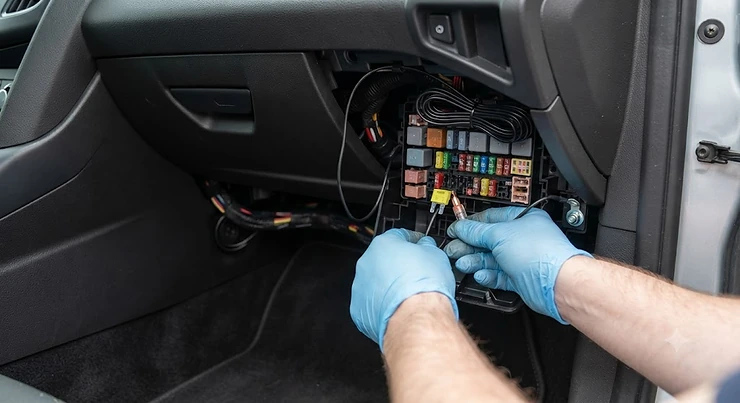
Picture this: you nip into the shop for milk, come back twenty minutes later, and there’s a fresh dent in your bumper with no note, no witness, and definitely no honesty from whoever did it. This is precisely the gap a hardwire kit for dash cam setups is built to close. A hardwire kit for dash cam is a cable-and-fuse-tap assembly that wires your camera directly into your car’s fuse box, delivering constant power so the device can record around the clock rather than switching off the moment you take the key out of the ignition. Instead of relying on a 12V socket that dies with the engine, your camera stays awake, watching your bonnet and boot while you’re at the school gates, the supermarket, or fast asleep at home.
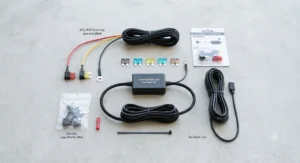
Prices for dash cams keep climbing as sensors and Wi-Fi chips get fancier, yet the humble hardwire kit for dash cam remains one of the cheapest, highest-impact upgrades in your entire in-car electronics box. It’s the difference between a camera that only proves your innocence while driving and one that’s genuinely guarding your car twenty-four hours a day. Reviewers searching for a dash cam hardwire kit review are usually chasing the same three things: will it fit my camera, will it kill my battery, and is it actually straightforward to fit without an auto electrician. We’ll answer all three, honestly and with real products, throughout this guide.
Below you’ll find seven genuine hardwire kits available through amazon.co.uk, spanning budget universal cables through to brand-specific premium options, plus deep-dive sections on fuse types, voltage cutoff protection, installation, common mistakes, and UK-specific legal considerations. Whether you’re chasing the best hardwire kit for a first-time fit or upgrading a tired old cigarette-lighter setup, there’s a sensible match here for your car and your camera.
Quick Comparison Table
| Kit | Connector | Cutoff Protection | Length | Best For |
|---|---|---|---|---|
| Nextbase Hardwire Kit Series 2 | Mini USB | Voltage-based | 5m | Nextbase owners wanting a factory-matched fit |
| VIOFO HK4 Type-C Hardwire Kit | USB-C | Time-based | ~6m | VIOFO A229/A119 Mini 2 owners |
| 70mai Hardwire Kit UP03 | Type-C | Voltage-based | 3m (10ft) | 70mai camera owners on a budget |
| REDTIGER Dash Cam Hardwire Kit | USB-C | Voltage-based | ~3.5m | Universal budget buyers |
| Range Tour Hardwire Kit | USB-C | Voltage-based | 4m | Widest fuse-adapter compatibility |
| Gebildet Hardwire Kit | Mini USB | Voltage-based | 3m (10ft) | Older or Mini USB cameras |
| eSynic 3-in-1 Hardwire Kit | USB-C/Mini/Micro | Voltage-based | 3.5m | Buyers unsure of their camera’s port |
Looking at the table, the split comes down to brand-matched versus universal. Nextbase Hardwire Kit Series 2 and VIOFO HK4 Type-C Hardwire Kit are built for one ecosystem and fit like a factory part, while Range Tour Hardwire Kit and eSynic 3-in-1 Hardwire Kit hedge their bets with multiple connectors and fuse adapters so they’ll work across dozens of camera brands. If your camera brand isn’t listed above, the universal options are the safer starting point, since they include the widest spread of fuse-tap sizes.
💬 Found a kit that matches your camera already? Bookmark this page and share it with a friend who’s still running on a cigarette-lighter cable!
Top 7 Dash Cam Hardwire Kits: Expert Analysis
1. Nextbase Hardwire Kit Series 2 — cleanest factory-matched install
If you already own a Nextbase camera, this is the obvious starting point, and it’s worth expanding on why. The kit is designed specifically around Nextbase’s own connector shape, so there’s none of the “will this actually plug in properly” anxiety that comes with generic cables. It ships with a 5m cable plus both standard ATO/C and mini ATM fuse taps, which covers the two most common UK fuse-box formats without you needing to identify anything yourself. Built-in battery protection cuts power automatically once your car’s voltage drops to a level that would risk a flat start, and the cable length is genuinely generous for routing along the A-pillar, under the door seals, and back to the fuse box without visible slack.
On paper, this suits Nextbase 122, 222, 322GW, 422GW, 522GW, and 622GW owners best, since the fit tolerances are matched to those exact models. Reviewers consistently note the cable’s hidden-routing design makes for a genuinely tidy dashboard, with far less visible wire than budget alternatives — a common complaint about universal kits is exactly the opposite: excess slack that has to be tucked away crudely. What most buyers overlook is that this isn’t a universal kit at all, so if you switch camera brands later, this cable becomes redundant.
Pros:
- ✅ Matched connector removes compatibility guesswork
- ✅ Generous 5m length for tidy full-car routing
- ✅ Voltage-based cutoff genuinely protects the battery
Cons:
- ❌ Locked to Nextbase-branded cameras only
- ❌ Sits at the pricier end of the hardwire kit for dash cam category
Typically priced in the £25-£35 range, this is a fair premium for Nextbase owners who want a factory-grade fit rather than a generic cable, and it’s often the top pick among dash cam hardwire kit amazon searches specifically filtered to that brand.
2. VIOFO HK4 Type-C Hardwire Kit — best for VIOFO’s newer camera range
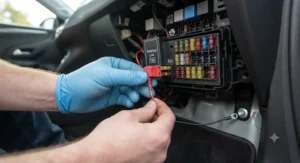
VIOFO built its reputation on transparent, enthusiast-friendly hardware, and the HK4 continues that trend. It’s designed around the USB-C ports found on the A229 Plus, A229 Pro, A229 Ultra, A119 Mini 2, A119M Pro, WM1, and T130 models, giving a snug, purpose-built connection rather than an adapter-stacked universal cable. The kit uses time-based cutoff protection, meaning it disconnects power after a pre-set number of hours parked rather than monitoring live battery voltage — a distinction that genuinely matters and is rarely explained clearly on listing pages.
What this means in practice: time-based cutoff is simple and reliable, but it’s less adaptive than voltage-sensing designs if your battery is already ageing or your car sits unused for days at a stretch. VIOFO’s own documentation is refreshingly honest that its flagship HK6 kit (built for the A329S) adds Bluetooth-based real-time voltage monitoring for exactly this reason, so the HK4 is the mid-tier choice rather than the outright safest option in the lineup. Fuse taps aren’t bundled as standard, which is an easy trap for first-time buyers to fall into — more on that in the fuse box connection kit section below.
Pros:
- ✅ Purpose-matched USB-C fit for newer VIOFO models
- ✅ Trusted brand with detailed public installation documentation
- ✅ Long cable run of around 6 metres
Cons:
- ❌ Time-based cutoff is less adaptive than voltage-sensing designs
- ❌ Fuse taps must be purchased separately
Expect a price in the £20-£30 range, with fuse taps adding a small amount extra — factor that into any direct comparison with kits that bundle fuses in the box.
3. 70mai Hardwire Kit UP03 — best budget pick for 70mai owners
70mai’s own hardwire cable is a genuinely sensible budget option if you’re running one of the brand’s popular mid-range cameras. It’s compatible with the M310, A410, A510, A810, A800SE, 4K Omni, T800, and T800E models, accepts a wide 12V-30V input range (useful if you ever drive a van or older commercial vehicle with different electrical characteristics), and steps that down cleanly to a 5V/2.4A output. At 10 feet, the cable is shorter than some rivals, which is fine for compact hatchbacks but can feel tight in longer estates or SUVs where the fuse box sits well forward of the dashboard.
Aggregated reviewer sentiment for 70mai’s own accessories tends to praise straightforward plug-fit with the brand’s cameras and criticise the shorter cable length for bigger vehicles specifically — a pattern that lines up with what you’d expect from a cost-optimised, brand-matched product. Based on the spec comparison with pricier rivals, the trade-off here is refreshingly transparent: you’re paying less because the cable is shorter and the fuse kit is more basic, not because the low-voltage protection itself is any less capable.
Pros:
- ✅ Wide 12V-30V input tolerance suits more vehicle types
- ✅ Genuine voltage-based low-voltage cutoff protection
- ✅ Noticeably cheaper than most rivals here
Cons:
- ❌ 10ft cable can feel short in larger vehicles
- ❌ Locked to specific 70mai camera models
At around £15-£25, this sits near the bottom of the category on price, making it a strong contender if you’re specifically searching for the best hardwire kit on a tight budget and already own a compatible 70mai camera.
4. REDTIGER Dash Cam Hardwire Kit — solid universal budget all-rounder
REDTIGER’s cable takes the opposite approach to the brand-locked kits above: it’s built to be broadly compatible with USB-C dash cams regardless of manufacturer, stepping 12V-24V down to 5V and bundling what the listing describes as a “double-4 fuses” set, meaning multiple fuse-type adapters rather than a single size. This matters because UK cars vary between mini, micro-2, and low-profile mini fuse formats depending on age and manufacturer, and a kit that only includes one size can leave you stuck mid-install.
What most buyers overlook with universal kits like this is that “USB-C compatible” doesn’t guarantee a snug physical fit — some dash cam USB-C ports sit recessed or at an angle that a generic plug can’t reach comfortably, so it’s worth checking your camera’s port photos before ordering. Aggregated feedback for this style of universal hardwire kit commonly highlights easy installation and clear instructions as strengths, while a recurring complaint across the wider category (not unique to any single brand) is that a poorly seated fuse tap can occasionally trip warning lights or, in rare cases, prevent the car starting until reseated correctly — a genuine reason to follow torque and seating guidance carefully during fitting.
Pros:
- ✅ Multiple fuse-adapter sizes covers more UK vehicles
- ✅ Genuine voltage-based cutoff protection included
- ✅ Comfortably one of the cheaper universal options
Cons:
- ❌ USB-C fit isn’t guaranteed snug on every camera
- ❌ Fuse-tap seating needs care to avoid electrical faults
Priced typically under £20, this is a dependable dash cam hardwire kit amazon search result for anyone whose camera brand isn’t covered by a dedicated first-party cable.
5. Range Tour Dash Cam Hardwire Kit — widest fuse compatibility on this list
Range Tour’s kit leans hard into universality, shipping with three-core cabling, four adapter types spread across eight individual fuse adapters, and a 4-metre (13ft) run that’s among the longest of the budget options here. The sheer adapter spread is the standout feature: rather than assuming your fuse box uses one common format, it hedges across several, which meaningfully reduces the odds of an incompatible fit on the day.
Based on the spec comparison against REDTIGER and Gebildet above, Range Tour’s extra length and adapter breadth make it a sensible default pick when you genuinely don’t know your car’s fuse-box format in advance — useful if you’re fitting a dash cam into a car you’ve just bought secondhand. The 2.5A output rating is comfortably enough headroom for most single or dual-channel cameras, though buyers running power-hungry 4K front-and-rear setups with parking-mode Wi-Fi active should double-check their camera’s peak draw against this figure before assuming it’s sufficient.
Pros:
- ✅ Eight fuse adapters across four types included
- ✅ Generous 4m cable length
- ✅ Comfortable 2.5A output headroom for most cameras
Cons:
- ❌ Bundled fuse variety adds slight setup complexity
- ❌ Higher-draw 4K parking-mode setups should verify amperage first
Sitting in a similar £10-£16 range to other universal budget kits, Range Tour earns its keep through sheer flexibility rather than brand prestige.
6. Gebildet Dash Cam Hardwire Kit — best for older Mini USB cameras
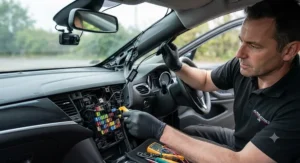
Not every dash cam on the road has moved to USB-C, and Gebildet’s kit specifically serves that older installed base with a right-angle Mini USB connector, a 10ft cable, and ACN/ACS/ACU-style add-a-circuit fuse holders that suit a slightly different family of vehicle fuse boxes than the ATO/ATM taps found in Nextbase’s kit. The right-angle plug is a small but genuinely useful detail, since a straight Mini USB connector protruding from a dash cam mount can look untidy and occasionally catch on visor or mirror movement.
What the spec sheet won’t tell you, but is worth flagging honestly, is that Mini USB as a connector standard is being phased out across newer camera ranges in favour of USB-C, so this kit’s long-term relevance depends on you keeping your current camera rather than upgrading soon. For now, though, if your existing dash cam still uses Mini USB, this remains one of the few genuinely dedicated options rather than an awkward adapter chain.
Pros:
- ✅ Right-angle plug keeps the mount area tidy
- ✅ Purpose-built for the declining Mini USB camera base
- ✅ Voltage-based low-voltage cutoff included as standard
Cons:
- ❌ Mini USB is gradually being phased out industry-wide
- ❌ 10ft length can be tight in larger vehicles
Pricing generally sits in the £10-£15 bracket, making it a low-risk buy if you’re not planning to replace your camera in the near future.
7. eSynic 3-in-1 Hardwire Kit — best for uncertain or mixed camera setups
eSynic’s answer to connector confusion is simply to include all three common plug types — USB-C, Mini USB, and Micro USB — in one 3.5m kit, which sidesteps the entire “will this fit my camera” question that trips up so many first-time buyers of a hardwire kit for dash cam. This also makes it the most sensible pick if you’re running two different dash cams in one household, or you’re not entirely sure which connector your camera actually uses without checking the manual.
Here’s what to weigh with any 3-in-1 design: bundling three connector types generally means the accompanying fuse-tap selection is kept simpler and more generic than a brand-specific kit, so buyers with unusually shaped or recessed fuse boxes may still need a separate fuse-tap pack. Reviewers consistently note that all-in-one kits like this earn their value through avoided returns rather than any single standout spec — you’re essentially paying a small premium to remove the guesswork rather than for superior electrical performance.
Pros:
- ✅ Covers USB-C, Mini USB, and Micro USB in one box
- ✅ Removes the connector-guessing risk entirely
- ✅ Solid mid-length 3.5m cable run
Cons:
- ❌ Fuse-tap selection is more generic than dedicated kits
- ❌ Some port shapes may still need extra adapters
At roughly £13-£20, this is a smart “just in case” purchase, and consistently turns up near the top of dash cam hardwire kit review roundups for exactly that flexibility.
Practical Installation & Setup Guide
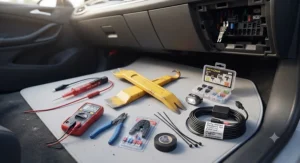
Fitting any hardwire kit for dash cam use follows broadly the same sequence regardless of which of the seven kits above you choose, and knowing the steps in advance saves a good hour of trial and error. First, locate your fuse box (usually under the dashboard on the driver’s or passenger’s side, occasionally in the engine bay) and identify one switched (“ACC”) fuse slot that only receives power with the ignition on, and one permanently live (“BATT”) fuse slot. Most kits include a paper fuse-tap diagram, but a multimeter is the only truly reliable way to confirm which slots are switched versus constant.
Second, remove the target fuse, slot it into the fuse-tap adapter alongside a correctly rated spare fuse (never leave the original circuit’s fuse out — this is a genuinely common first-30-days mistake), then push the combined tap back into the empty slot. Third, route the cable along the A-pillar trim and under the dashboard using the included plastic trim tool rather than a screwdriver, which avoids snapping factory clips. Fourth, connect the ground wire to a bare metal bolt point, ideally one already used for an existing earth rather than drilling a new hole. Finally, plug the camera in, start the engine, and confirm the camera powers up correctly before refitting all trim panels. Budget 30 to 90 minutes for a first attempt, and don’t rush the fuse-box identification step — it’s the single most common source of installation errors across every kit on this list.
Real-World Scenarios: Which Hardwire Kit Suits Your Driving?
Consider three realistic UK drivers. First, a university student commuting eight miles into the city centre in an older hatchback with an unfamiliar fuse-box layout: the Range Tour Hardwire Kit or eSynic 3-in-1 Hardwire Kit make sense here, since both hedge against uncertainty with wider adapter or connector coverage, and neither demands a big budget outlay for a car that might be traded in within a year or two.
Second, a family using a five-seater SUV for the school run and weekend trips, parked on a driveway overnight where theft and vandalism risk is genuinely elevated: pairing a Nextbase camera with the Nextbase Hardwire Kit Series 2 delivers the tidiest, most reliable long-term fit, and its 5m length comfortably reaches a further-forward fuse box in a bigger vehicle. Third, a driver who already owns a VIOFO A229 Plus and wants full parking-mode functionality without switching camera ecosystems: the VIOFO HK4 Type-C Hardwire Kit is the obvious match, provided they also budget for a separate fuse-tap pack rather than assuming one’s included in the box.
How to Choose a Hardwire Kit for Dash Cam
Working through these criteria in order will steer you towards the right kit faster than scrolling endless listing pages.
- Confirm your camera’s port type first. USB-C, Mini USB, and Micro USB cables aren’t interchangeable, so this single check eliminates most of the wrong-purchase risk immediately.
- Check whether your camera brand has a dedicated kit. Brand-matched cables from Nextbase, VIOFO, or 70mai generally fit more snugly than universal alternatives.
- Decide between voltage-based and time-based cutoff. Voltage-sensing designs adapt to your actual battery condition; time-based designs are simpler but less responsive to an ageing battery.
- Measure roughly how far your fuse box sits from the camera mount. Larger vehicles typically need a 4m-plus cable to route tidily without visible slack.
- Identify your vehicle’s fuse format in advance if possible. UK cars commonly use mini, micro-2, or low-profile mini blade fuses, and mismatched adapters are a frequent fitting frustration.
- Check whether fuse taps are bundled or sold separately. Some brand-specific kits, including VIOFO’s HK4, require an additional fuse-tap purchase that’s easy to miss at checkout.
- Weigh cable length against tidiness of routing. A cable that’s slightly too long is far easier to tuck away neatly than one that’s a few centimetres short.
Dash Cam Hardwire Kit vs Cigarette Lighter Charger
The obvious rival to any hardwire kit for dash cam is simply leaving the camera plugged into the 12V socket it likely came with. On paper, the cigarette lighter route wins on pure convenience — no fuse box, no trim removal, plugged in within seconds. In practice, that convenience comes at a real cost: your camera stops recording the moment the ignition is off, which means it captures nothing during the exact scenarios — car park scrapes, overnight vandalism, hit-and-runs — where footage tends to matter most.
There’s also a tidiness argument that’s easy to underrate until you live with it daily: a cigarette-lighter cable typically runs loose across the dashboard and down past the gearstick, catching on hands and getting yanked out at inconvenient moments, whereas a hardwired install tucks entirely out of sight. The one scenario where cigarette-lighter power still makes sense is a car that’s frequently borrowed, hired, or sold on, where a permanent modification feels like overkill for temporary ownership. For anyone keeping their car more than a year or two, though, the case for hardwiring is straightforward: a modest one-off cost buys genuinely continuous protection rather than protection that switches off exactly when the engine does.
Common Mistakes When Buying and Fitting a Hardwire Kit
The single most frequent buying mistake is ordering a cable based on the camera brand alone without checking the actual port shape, since some brands ship multiple port revisions across their own model range. On the fitting side, leaving an empty fuse slot without inserting the original vehicle fuse alongside the tap is a genuinely common error, and it can disable whatever circuit that slot originally powered — sometimes something as unglamorous but important as a wiper motor or interior light. Reviewers across the wider hardwire kit for dash cam category also flag rushed ground connections as a recurring issue: a ground wire attached to painted rather than bare metal creates a poor connection that can cause intermittent camera resets, which is easily mistaken for a faulty product rather than a fitting error. Finally, skipping the multimeter check on which fuse slot is switched versus constant is a mistake that specifically undermines parking mode, since a permanently-live “ACC” connection defeats the point of the switched circuit entirely.
What Is a Low Voltage Cutoff Cable, and Why Does It Matter?
A low voltage cutoff cable is the protective circuitry built into most modern hardwire kits that monitors your car battery’s voltage while the engine is off and automatically disconnects the dash cam once voltage drops to a pre-set threshold, typically somewhere around 11.4 to 11.6 volts. Without this protection, a camera left recording continuously in parking mode could, in theory, drain a battery flat over several days of the car sitting unused, leaving you stranded with no start. Every kit reviewed in this guide includes some form of this protection, though as covered above, the sophistication varies: voltage-sensing designs like those in the Nextbase Hardwire Kit Series 2, 70mai Hardwire Kit UP03, REDTIGER Dash Cam Hardwire Kit, Range Tour Hardwire Kit, Gebildet Hardwire Kit, and eSynic 3-in-1 Hardwire Kit react to actual battery condition in real time, while the VIOFO HK4 Type-C Hardwire Kit‘s time-based approach cuts power after a fixed number of hours regardless of voltage. For most everyday drivers the distinction is academic, but anyone with an older battery, a car that sits unused for a week or more at a time, or a habit of forgetting to check tyre pressures until the light comes on should lean towards voltage-sensing protection for genuine peace of mind.
Fuse Box Connection Kit: Choosing the Right Fuse Tap
The fuse taps bundled with — or sometimes sold alongside — your hardwire kit are what actually make the electrical connection into your car, and getting the format wrong is the most common reason a fitting attempt stalls halfway through. UK vehicles commonly use one of three blade fuse formats: standard ATO/ATC (the largest and oldest), Mini (a narrower, more compact version fitted to most cars built since the early 2000s), and Micro2 or Low-Profile Mini (increasingly common in newer, tightly packaged fuse boxes). A blade fuse works by carrying current through a thin metal strip that melts and breaks the circuit if current exceeds a safe threshold, protecting the wiring behind it from damage — worth understanding conceptually even if you never need to replace one yourself. Kits like the Range Tour Hardwire Kit, which bundles eight adapters across four types, and the REDTIGER Dash Cam Hardwire Kit, with its multi-fuse set, are specifically designed to remove the guesswork by covering several formats in one box, whereas brand-specific kits such as the VIOFO HK4 Type-C Hardwire Kit may require you to identify your exact fuse format and buy a matching tap separately. If you’re unsure which format your car uses, open the fuse box cover — the size is usually printed or moulded directly onto the fuse itself or the cover diagram, removing any need to guess.
Permanent Dash Cam Power: Long-Term Cost & Maintenance
Framed as a one-off purchase, a hardwire kit for dash cam use typically costs somewhere between £10 and £35 depending on brand and features, which is a genuinely modest outlay set against months or years of continuous parking-mode protection. There’s essentially no ongoing maintenance cost: the cable itself has no consumable parts, and the only real long-term consideration is battery health, since parking mode does place additional (though protected) load on your car battery compared with a camera that switches off with the ignition. Reviewers rarely report battery degradation directly attributable to a correctly functioning voltage-cutoff kit, though drivers with batteries already past four or five years old may notice slightly faster wear if the car is frequently left for extended periods with parking mode active. Total cost of ownership comparisons favour hardwiring over repeatedly replacing snapped or worn cigarette-lighter cables, which is a surprisingly common recurring cost for cameras that rely on that connection daily. If your battery is due for replacement within the next year regardless, it’s worth timing that alongside your hardwire install so you’re starting the setup with a battery genuinely capable of handling continuous parking-mode monitoring.
Dash Cam Hardwire Kit Reviews: What Buyers Actually Say
Rather than repeating marketing copy, it’s worth being upfront about what aggregated genuine reviews across this category consistently surface, both positive and negative. On the positive side, buyers across nearly every universal kit reviewed here frequently praise clear instructions and generous included cable length relative to price, and the tidiness achieved once cables are properly hidden behind trim panels is a recurring point of satisfaction. On the critical side, the most common complaint isn’t about the cable itself but about fitting: a small but consistent minority of reviewers across the wider category report their car failing to start after a rushed or incorrect installation, almost always traced back to a fuse-tap seated incorrectly or a missing original fuse rather than a faulty kit. Cable length also draws mixed feedback depending on vehicle size — what’s generous in a supermini can feel tight in an estate or SUV, so it’s worth double-checking your specific model against the lengths listed in the comparison table above rather than assuming one size fits all. If you can’t verify a specific product’s individual review history at the point of buying, treat aggregated category-level patterns like these as a more reliable guide than any single five-star listing.
Safety, MOT Compliance & Data Protection
Fitting a hardwire kit doesn’t change the legal placement rules that already apply to your dash cam itself. Under UK MOT guidance, the windscreen is divided into visibility zones, and anything mounted or stuck to the glass — including a dash cam and any visible cabling — must not intrude significantly into the driver’s direct line of sight, particularly within the zone centred on the steering wheel. Routing your hardwire cable neatly along the A-pillar rather than leaving it draped across the windscreen isn’t just tidier, it genuinely helps you stay clear of this requirement.
There’s a data protection angle worth knowing too, particularly once parking mode is active and recording continuously rather than only while you drive. Under UK GDPR guidance for dashcam users, personal use of a dash cam carries relatively light obligations, but anyone using footage commercially, or sharing identifiable clips online, takes on greater responsibility for how that footage is handled and stored. For most private drivers running a hardwired setup purely for their own protection, this is a minor consideration rather than a barrier, but it’s worth bearing in mind before posting parking-mode footage publicly. A general overview of how dash cams work is a useful starting point if you want the wider technical and historical context beyond this guide’s UK-specific advice, and if you’d like a deeper technical grounding in how the fuse taps themselves function electrically, the blade fuse standard used across nearly every hardwire kit in this article is worth a quick read.
FAQ
❓ Does a hardwire kit drain my car battery?
❓ Can I fit a hardwire kit myself without a mechanic?
❓ Will a hardwire kit fit any dash cam?
❓ Do I need to buy fuse taps separately?
❓ Is hardwiring a dash cam legal in the UK?
Conclusion
Choosing the right hardwire kit for dash cam use comes down to two honest questions: does it physically fit your camera, and does its cutoff protection suit how your car actually gets used. Brand-matched options like the Nextbase Hardwire Kit Series 2 and VIOFO HK4 Type-C Hardwire Kit reward existing owners of those ecosystems with a snugger, tidier install, while universal picks like the Range Tour Hardwire Kit, REDTIGER Dash Cam Hardwire Kit, and eSynic 3-in-1 Hardwire Kit are the sensible default when you’re unsure of your camera’s exact port or your car’s fuse format. Budget-focused drivers running compatible cameras will find genuine value in the 70mai Hardwire Kit UP03 and Gebildet Hardwire Kit, both of which deliver real voltage protection without the premium price tag.
Whichever you choose, the underlying value proposition barely changes: a modest, one-off cost that turns your dash cam from a driving-hours-only witness into a genuine round-the-clock guard for your car. Take the time to check your connector type, identify your fuse format where possible, and follow the installation steps carefully, and you’ll have a tidy, reliable setup that quietly does its job for years.
✨ Ready to stop your dash cam switching off the second you park? Browse today’s price on any of the seven kits above and get parking mode running properly this weekend! 🔌
Recommended for You
- Best Dash Cam Motion Detection Parked 2026: Top 7 UK Picks
- Dash Cam With Parking Mode: 7 Best Picks for 2026
- 7 Best Dash Cam With Speed Camera Alerts Picks (UK 2026)
Disclaimer: This article contains affiliate links. As an Amazon Associate, I earn from qualifying purchases. If you purchase products through these links, we may earn a small commission at no additional cost to you.
✨ Found this helpful? Share it with your friends! 💬🤗
