
In This Article
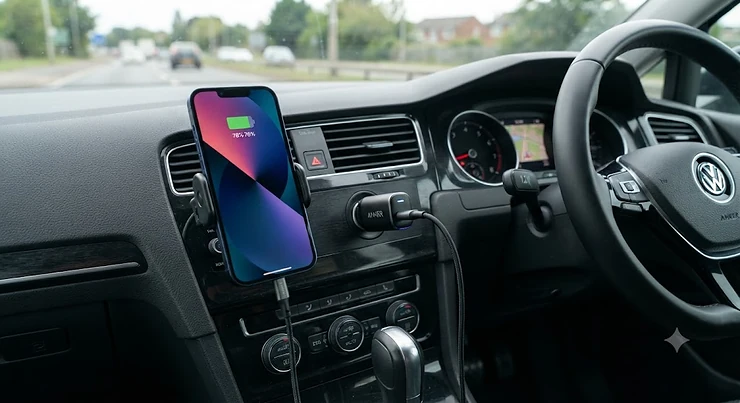
Somewhere between the school run and the motorway services, your iPhone always seems to hit 12% at the worst possible moment. A usb c car charger iphone owners can actually trust isn’t just a nice-to-have anymore — since the iPhone 15, every model in the line-up ditched Lightning for USB-C, a switch that followed the EU’s push for a single universal charging standard across new devices, and that single change quietly rewrote the rules for what belongs in your glovebox. A USB-C car charger is a 12V-socket-powered adapter that converts your car’s electrical system into safe, regulated USB-C output, typically using Power Delivery (PD) to push power faster than the old 5W bricks ever could. Buy the wrong one, though, and you’re stuck watching a percentage crawl upward at motorway service-station speeds.
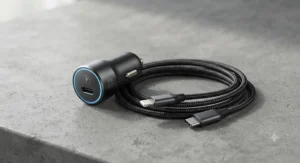
This guide cuts through the wattage jargon. We’ve dug into seven genuinely available products, from budget cigarette lighter units to serious multi-device GaN chargers, and weighed their real specs against the aggregated sentiment of actual buyers — not invented five-star raves. You’ll get a plain-English breakdown of pd car charger tech, why MFi certification matters less than you’d think for a USB-C iPhone, and a decision framework so you’re not left guessing in the Amazon reviews section at 11pm. Whether you’re commuting 40 minutes each way or road-tripping to Cornwall, there’s a sensible pick here — and a few you should quietly scroll past.
What Is a USB C Car Charger for iPhone?
A usb c car charger iphone is a compact adapter that plugs into your vehicle’s 12V or 24V socket and delivers regulated power through one or more USB-C ports, usually via USB Power Delivery (PD) or Quick Charge protocols, letting an iPhone 15 or 16 charge several times faster than a standard 5W setup.
Quick Comparison Table
| Charger | Max Output | Ports | Best For |
|---|---|---|---|
| Anker 313 USB-C Car Charger | 40W | 2x USB-C | Everyday commuters wanting a trusted brand |
| UGREEN PD 30W USB-C Car Charger | 30W | 2x USB-C, 1x USB-A | Budget-conscious families |
| Belkin BoostCharge 37W Car Charger | 37W | 1x USB-C, 1x USB-A | Mixed iPhone/Android households |
| UGREEN 130W USB-C Car Charger | 130W | 2x USB-C, 1x USB-A | Laptop owners and power users |
| LISEN 90W USB-C Car Charger | 90W | 2x USB-C | Rideshare drivers, dual-device charging |
| JOYROOM 175W GaN Car Charger | 175W | 2x USB-C, 1x USB-A | Families with multiple gadgets |
| AINOPE 67.5W Mini Car Charger | 67.5W | 1x USB-C, 1x USB-A | Minimalists needing a spare cigarette lighter socket adapter |
Looking at the table, the spread runs from a modest 30W right up to 175W, and that gap matters more than it looks. An iPhone 16 tops out its own charging curve well under 30W, so anything above that is really about the other port charging a tablet or passenger’s phone simultaneously. UGREEN PD 30W USB-C Car Charger and AINOPE 67.5W Mini Car Charger suit single-phone households on a budget, while JOYROOM 175W GaN Car Charger and UGREEN 130W USB-C Car Charger earn their keep only if you’re regularly charging a laptop or two devices at full speed at once.
💬 Found the right wattage class already? Scroll down to see exactly which model fits your glovebox.
Top 7 USB C Car Chargers for iPhone: Expert Analysis
1. Anker 313 USB-C Car Charger — the sensible all-rounder
The Anker 313 USB-C Car Charger (also sold as the PowerDrive III Duo) opens this list because it’s the pick most people should stop overthinking and just buy. Its twin 20W USB-C ports (36-40W combined, depending on retailer listing) run on Anker’s PowerIQ 3.0 system, which negotiates the correct PD voltage automatically rather than forcing you to guess. In practice, that means an iPhone 16 will hit roughly 50% in around 30 minutes when paired with a proper USB-C to USB-C cable — Apple doesn’t sell a USB-C car charger of its own, so third-party PD compliance is what actually matters here, not any Apple branding. Based on the spec comparison against pricier rivals, this is squarely aimed at the daily commuter or parent who wants two kids’ phones charged without a second thought, rather than the enthusiast chasing laptop-grade wattage. Reviewers consistently report that the aluminium-alloy shell survives years of glovebox abuse and that the compact size doesn’t block the car’s other 12V accessories, though a small minority note the plastic surround around the ports can feel less premium than Anker’s wall chargers.
Pros:
- ✅ Reliable PD negotiation with no dropped connections
- ✅ Compact shell doesn’t crowd the dashboard
- ✅ Backed by Anker’s long-standing warranty support
Cons:
- ❌ No USB-A port for older accessories
- ❌ 40W ceiling won’t satisfy laptop charging needs
Typically found in the £13-£20 range (check current price, as figures shift), this is one of the strongest value picks on this list — you’re paying for dependable engineering, not flashy wattage numbers.
2. UGREEN PD 30W USB-C Car Charger — best budget-conscious family pick
The UGREEN PD 30W USB-C Car Charger packs two USB-C ports and one USB-A port into a genuinely small housing, splitting a combined 30W across whichever devices are plugged in. What most buyers overlook about this model is the SCP, FCP and AFC protocol support alongside standard PD — a detail that matters if your household mixes an iPhone with an older Android handset that doesn’t play nicely with generic PD chargers. On paper this means every phone in the car gets its fastest compatible charge simultaneously rather than one device stealing all the wattage. Aggregated review sentiment on UGREEN’s own storefront and Amazon UK listings points to praise for the blue LED indicator being genuinely useful in a dark footwell, alongside a for-the-price build quality that punches above its £10-£15 bracket. The trade-off, as you’d expect at this wattage, is that a MacBook or iPad Pro won’t charge at anything close to full speed here — it’s built for phones, not laptops.
Pros:
- ✅ Triple-port flexibility for mixed households
- ✅ Supports five separate fast-charge protocols
- ✅ Genuinely pocket-friendly price point
Cons:
- ❌ 30W ceiling limits multi-device full-speed charging
- ❌ Not suitable for laptop charging
Sitting in the under-£15 range at the time of research, this is the pick for anyone who wants three ports without paying premium prices.
3. Belkin BoostCharge 37W Dual Port PPS Car Charger — best for iPhone and Samsung households
Belkin has been in the accessories game for over three decades, and the Belkin BoostCharge 37W Dual Port PPS Car Charger shows that experience in its restrained, sensible design. A 25W USB-C PD3.0 port sits alongside a 12W USB-A port, and crucially it supports PPS (Programmable Power Supply), which lets it fine-tune voltage for Samsung’s Super Fast Charging as well as standard Apple PD — genuinely useful in a two-phone-two-ecosystems household. Belkin’s own testing found this charges a recent iPhone from flat to 50% in around 23 minutes, a figure roughly in line with Anker’s competing model. Honest analysis of the aggregated reviews shows a recurring theme: buyers repeatedly mention it “replaced my original car charger” and stayed installed permanently, a strong sign of long-term satisfaction rather than a novelty purchase that gets swapped out. Some models in this line bundle a USB-C-to-Lightning cable, which is handy only if someone in the car still has an older Lightning iPhone.
Pros:
- ✅ PPS support suits mixed iPhone and Samsung families
- ✅ Strong long-term reliability reported by owners
- ✅ Compact footprint fits tightly packaged dashboards
Cons:
- ❌ Bundled cable (where included) may be Lightning, not USB-C
- ❌ 25W USB-C port trails premium multi-port rivals
Expect to pay in the £15-£25 range, making this a strong mid-tier contender against the Anker 313 above.
4. UGREEN 130W USB-C Car Charger — best for laptop owners on the road
Where the earlier UGREEN entry plays it safe, the UGREEN 130W USB-C Car Charger goes all-in on power. Two USB-C ports and a USB-A port share up to 130W combined, using PD3.0, QC4.0 and PPS protocols alongside a bundled 100W-rated USB-C cable with a built-in E-marker chip — a small component that verifies the cable can safely carry high current, something budget cables often skip. Here’s what the spec sheet won’t tell you outright: this level of output exists for the passenger charging a MacBook or a work laptop mid-journey, not for the iPhone itself, since no iPhone accepts anywhere near 130W. Reviewers on Amazon UK who use this for road trips report it comfortably running a power bank or laptop alongside a phone without either device slowing down, and UGREEN’s cable is specifically noted for surviving over 30,000 bend cycles in the manufacturer’s own durability testing. If you’re a single-iPhone household, though, this is genuine overkill — you’d be paying for headroom you’ll never use.
Pros:
- ✅ True simultaneous high-speed multi-device charging
- ✅ Bundled cable with E-marker chip for safety
- ✅ Handles laptops as well as phones and tablets
Cons:
- ❌ Significant overkill for single-iPhone use
- ❌ Larger housing takes up more socket clearance
Positioned in the £25-£35 range at the time of writing, it’s a premium buy that only earns its price if you actually need laptop-grade output.
5. LISEN 90W USB-C Car Charger — best metal-build dual charger
The LISEN 90W USB-C Car Charger pairs two USB-C ports rated at up to 45W each with PD and QC3.0 support, wrapped in a compact metal housing that’s become something of a signature for the brand. Based on the spec comparison, 45W per port comfortably exceeds anything an iPhone can draw, meaning the ceiling here is really about two devices charging at their absolute fastest simultaneously rather than either one being starved. Aggregated customer sentiment across Amazon listings frequently highlights the metal shell’s heat dissipation as a genuine advantage over plastic competitors, particularly during long summer motorway drives when cabin temperatures climb. It’s a favourite among rideshare and delivery drivers specifically because it can top up a driver’s phone and a mounted navigation device at once without either charging slower than expected. The main knock, based on the smaller review pool compared with Anker or Belkin, is less brand-name recognition and correspondingly less certainty around long-term after-sales support.
Pros:
- ✅ Metal housing manages heat better than plastic rivals
- ✅ Both ports support full-speed simultaneous charging
- ✅ Popular with high-mileage professional drivers
Cons:
- ❌ Smaller brand footprint than Anker or Belkin
- ❌ Review history is thinner than more established names
Typically listed around £15-£20, this is worth a look if metal build quality is a priority over brand prestige.

6. JOYROOM 175W GaN Car Charger — best for power-hungry multi-device families
The JOYROOM 175W GaN Car Charger is the heavyweight of this line-up, combining a 100W USB-C port, a 45W USB-C port and a 30W USB-A port using gallium nitride (GaN) semiconductor technology, which allows far more power to be packed into a smaller, cooler-running chassis than older silicon-based chargers. What most buyers overlook about this model is that GaN’s efficiency advantage isn’t just about speed — it also means less wasted heat, which matters when a charger sits wedged in a hot 12V socket for hours on a summer road trip. On paper, this configuration lets a family charge an iPhone, a tablet and a laptop simultaneously without any device dropping into a slower trickle-charge mode, something budget three-port units frequently can’t manage under full load. Reviewers report the build feels notably premium for the category, though a handful mention the housing runs warm to the touch under sustained heavy use — expected behaviour at this wattage class, but worth knowing before you tuck it somewhere hard to reach.
Pros:
- ✅ GaN tech delivers high output with less wasted heat
- ✅ Three ports handle phone, tablet and laptop together
- ✅ Genuinely premium build for the price bracket
Cons:
- ❌ Runs noticeably warm under full three-device load
- ❌ Unnecessary expense for single-phone drivers
Pricing generally falls in the £20-£30 range, positioning it as a genuine premium pick without crossing into luxury territory.
7. AINOPE 67.5W Mini Car Charger — best compact cigarette lighter socket adapter
Rounding out the list, the AINOPE 67.5W Mini Car Charger takes the opposite approach to the JOYROOM above: it’s built to disappear. A genuinely tiny all-metal housing plugs into any standard cigarette lighter socket adapter point and delivers PD and QC3.0 fast charging across one USB-C and one USB-A port, without protruding far enough to interfere with gear sticks or handbrakes in cramped older cars. Here’s what the spec sheet won’t tell you, but reviewers note: the mini form factor is the entire selling point for owners of classic or compact cars where socket clearance is tight, and several buyers specifically mention it as a “invisible” upgrade over bulkier units that used to knock against their knee. It won’t win any wattage contests against the JOYROOM or UGREEN 130W, but for a single iPhone plus one backup device, 67.5W is more than sufficient headroom.
Pros:
- ✅ Genuinely minimal footprint suits tight sockets
- ✅ All-metal build feels sturdy for its size
- ✅ More than enough power for one phone plus a backup
Cons:
- ❌ Not built for laptop or tablet-level charging
- ❌ Limited to two ports total
Expect a price around £10-£18 depending on retailer promotions, making it one of the cheaper entries here.
Practical Usage Guide: Setting Up Your Car Charger Properly
Getting a usb c car charger iphone owners rely on daily set up correctly takes five minutes, but skipping the basics is where most people go wrong. First, check your car’s socket voltage — the vast majority of passenger vehicles run 12V, though larger vans and older diesel models sometimes sit at 24V, so confirm your chosen charger explicitly supports both ranges (most do, but budget units occasionally don’t). Second, always pair your charger with a genuine USB-C to USB-C cable rated for at least 60W if you want PD speeds to actually materialise; a cheap bundled cable rated for only 3A will silently cap your charging speed regardless of what the charger itself can output. Third, in the first month of use, keep an eye on socket heat — a warm charger is normal under load, but one that’s hot to the touch after a short journey may indicate a poor-quality internal design worth returning. A common early mistake is leaving the charger permanently plugged in with the ignition off; most modern chargers draw negligible standby power, but older vehicles without accessory-mode sockets can see a very slow parasitic drain over several weeks of non-use. Finally, route the cable so it doesn’t cross the handbrake or gear lever — not just for tidiness, but because UK driving law requires you keep proper control of your vehicle at all times, and a stray cable snagging your hand mid-gear-change is a genuinely avoidable hazard.
Real-World Scenarios: Matching the Charger to Your Driving Life
Picture three different drivers. First, the daily commuter: 25 minutes each way, single iPhone, occasional podcast streaming that drains battery faster than expected. For this profile, the Anker 313 USB-C Car Charger or UGREEN PD 30W USB-C Car Charger covers everything needed without any wasted spend on wattage you’ll never touch. Second, the family road-tripper: two kids with tablets, a partner’s Android phone, and a six-hour drive to the coast ahead. Here, the JOYROOM 175W GaN Car Charger or UGREEN 130W USB-C Car Charger genuinely earns its higher price, since simultaneous full-speed charging across three devices prevents the inevitable “whose phone charges first” argument from the back seat. Third, the rideshare or delivery driver, plugged in for eight-plus hours a day with a phone mounted for navigation and a backup device on standby: the LISEN 90W USB-C Car Charger‘s heat-resistant metal build and dual full-power ports suit this near-constant-use pattern better than a plastic budget unit that wasn’t designed for all-day duty cycles.

How to Choose a USB C Car Charger for iPhone
- Confirm PD compatibility first. Any charger claiming “fast charging” without explicitly stating USB-C Power Delivery support may rely on older, incompatible protocols that won’t speed up an iPhone at all.
- Match wattage to your actual devices, not marketing numbers. An iPhone alone rarely benefits from anything above 30W per port; extra wattage only matters for tablets or laptops sharing the same charger.
- Check port count against your household, not just your own phone. A single-port charger is fine solo, but families and rideshare drivers should look at dual or triple-port models.
- Prioritise build material for your climate. Metal or GaN-based housings dissipate heat better during hot summer drives, extending the charger’s working life.
- Look for real safety certifications. UL, CE and FCC markings (or the UK’s UKCA mark) indicate independent testing against overheating and short-circuit risks.
- Read the cable’s included rating, not just the charger’s. A 100W-capable charger is wasted on a 3A cable — check both halves of the equation.
- Weigh brand support against price. Established names like Anker, Belkin and UGREEN typically offer longer warranties, which matters if a socket-side product fails after 18 months of daily use.
iPhone 15/16 USB-C Compatibility Explained
The move to iPhone 15/16 USB-C compatibility wasn’t just a connector swap — it changed how these phones negotiate power entirely. Every iPhone from the 15 series onward uses the same USB-C PD 3.0 charging standard as most Android flagships, MacBooks and iPads, meaning the vast majority of USB-C car chargers on this list will work without any Apple-specific certification requirement. Based on the spec comparison across manufacturers, Apple’s own official charging speed ceiling for these models sits at 20-27W depending on the exact phone, so any charger delivering at least 25-30W per port on USB-C PD will hit the iPhone’s real-world maximum. What the marketing copy on some listings won’t tell you plainly is that going beyond that per-port wattage brings no extra speed for the phone itself — the surplus capacity only matters when a second, higher-draw device shares the same charger. One genuine gotcha worth flagging: iPhone 15 and 16 models still ship with a USB-C to Lightning-style cable box in some regions, so always confirm you’re buying (or already own) a proper USB-C to USB-C cable, since a USB-A to USB-C cable will bottleneck charging speed regardless of how capable the charger is. For context on why this shift happened at all, the European Commission’s own common charger rules explain the wider push toward standardisation that ultimately shaped Apple’s decision, even for markets outside the EU.
MFi Certification: Do You Actually Need It?
MFi certification causes more confusion in car-charger shopping than almost any other term, largely because it originated for Lightning-connector accessories rather than USB-C ones. Apple’s “Made for iPhone” programme requires third-party manufacturers to pass compliance testing and include an authentication chip specifically inside Lightning cables and Lightning-based accessories — it protects against counterfeit connectors that could damage older iPhone charging ports. Here’s the honest, less-marketed reality: because the iPhone 15 and 16 use a standard USB-C port rather than Lightning, the charger itself doesn’t need MFi certification to charge these models safely or at full speed — USB-C PD is an open, universal standard that Apple’s own devices simply comply with alongside everyone else’s. MFi labelling still matters if you own an older Lightning iPhone (14 and earlier) and need a USB-C-to-Lightning cable, since an uncertified cable in that specific connector type carries a real risk of triggering “This accessory may not be supported” warnings or, in rare cases, charging port wear. For iPhone 15/16 owners specifically, a genuine USB-C PD-compliant charger and cable combination matters more than any MFi badge on the box.
PD Car Charger vs Standard 12V Charger
A pd car charger and an old-style standard 12V charger look nearly identical from across the dashboard, but the difference in actual charging speed is dramatic. Standard chargers, common in cars a decade ago, typically output a flat 5W-10W regardless of what’s plugged in, because they lack any negotiation protocol — they simply push the same voltage to every device, fast phone or not. A genuine pd car charger, by contrast, actively communicates with the connected iPhone to agree on the optimal voltage and current combination, unlocking speeds several times faster in favourable conditions. In practical terms, expect a standard charger to take upwards of two hours for a meaningful top-up, versus roughly 30 minutes to reach 50% with a proper PD unit on a modern iPhone. The catch is that PD chargers cost modestly more and require a compatible cable to unlock their full benefit — pairing a PD charger with a cheap USB-A style cable, or the wrong cable class, will simply degrade it back down to standard speeds, wasting the extra spend.
Cigarette Lighter Socket Adapter: Common Mistakes When Buying
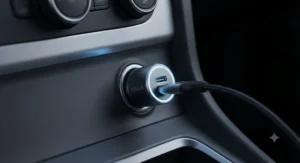
Even with the connector terminology having moved on from cigarettes decades ago, most drivers still call the car’s 12V outlet a cigarette lighter socket adapter point, and that legacy naming causes a surprising number of buying mistakes. The most common error is assuming every adapter automatically fits every vehicle socket — while the vast majority of modern cars share a standardised 12V socket diameter, older or commercial vehicles occasionally use a tighter tolerance that causes budget chargers to sit loosely and lose connection over bumps. A second frequent mistake is buying a charger rated only for 12V systems and installing it in a van or larger commercial vehicle running a 24V system, which can cause the charger to underperform or fail outright; always confirm dual 12-24V compatibility on the listing before buying. Third, buyers frequently overlook that a loose-fitting adapter vibrating in the socket over months of driving on rough roads can wear down the internal contacts faster than a snug, properly seated one — a five-minute check when you first install it saves a returned, “faulty” charger later. Finally, don’t assume a higher wattage number on the box guarantees better build quality; several of the highest-wattage budget units on marketplaces cut corners on the metal contacts themselves, which matters more for long-term reliability than the headline number.
What to Expect: Real-World Performance
Specification sheets promise clean, round numbers, but daily driving rarely matches a lab bench. Expect actual charging speed to dip slightly below advertised figures whenever the car’s engine is off and the socket is running purely on battery power, since many vehicles reduce accessory voltage slightly in that state to preserve the starter battery. Cabin temperature also plays a real role: a charger baking in direct summer sun for hours before you get in may briefly throttle its own output as an internal safety measure, then recover once airflow cools it down — this is the charger protecting itself, not a fault. On motorway journeys with the phone simultaneously running navigation, streaming music and using cellular data, don’t be surprised if the battery percentage climbs more slowly than the charger’s rated speed suggests, simply because the screen and radios are drawing power just as fast as the charger supplies it. None of this is a red flag; it’s simply the gap between a controlled testing environment and an actual British B-road in February.
Long-Term Cost & Maintenance
A usb c car charger iphone owners buy once rarely needs replacing for years, but a few habits stretch that lifespan further and keep the total cost of ownership low. Unplugging the charger when the car is left for extended periods avoids unnecessary wear from temperature cycling, particularly in unheated garages over winter. Wiping the metal contacts occasionally with a dry cloth prevents the light corrosion that can build up in humid climates and gradually degrade connection reliability. Cost-per-use-wise, even a premium £30 charger amortised over three to four years of daily use works out to a matter of pence per charge — genuinely cheaper than replacing a budget £8 unit that fails within a year, which is a pattern several aggregated reviews for unbranded marketplace chargers describe. If a charger ever gets noticeably hot within seconds of a device connecting, rather than gradually warming under sustained load, that’s a legitimate reason to stop using it and check the manufacturer’s warranty terms rather than pushing on regardless.
Safety, Regulations & Compliance Guide
Buying any USB-C car charger for iPhone use in the UK sits within a wider regulatory picture worth understanding. The EU’s Common Charger Directive, which took effect for most portable devices from 28 December 2024, mandates USB-C ports on new devices sold within the bloc, though the UK government has confirmed it is not currently replicating this requirement domestically — Apple’s own shift to USB-C across its range was, however, driven largely by that EU rule regardless of UK policy. Separately, always check that any charger you buy carries genuine UL, CE or UKCA safety marks, since these indicate independent testing against overheating, short-circuit and overcurrent risks rather than just a manufacturer’s own claims. If you’re planning to mount a phone alongside your charger for navigation, remember that current UK law prohibits touching a handheld phone at all while driving, even when stationary in traffic, so a secure dashboard or windscreen mount used alongside your charger genuinely isn’t optional if you want to stay both legal and safe.
✨ Ready to stop guessing at glovebox clutter? Compare your shortlist against the table above before you check out.
✨ Don’t Miss These Exclusive Deals!
🔍 Take your in-car charging setup to the next level with these carefully vetted picks. Click through to check current pricing and availability before stock runs low. A proper PD charger is one of the cheapest upgrades that noticeably improves every single drive.
Frequently Asked Questions
❓ Does the iPhone 16 need a special USB-C car charger?
❓ Will a PD car charger damage an older iPhone with Lightning?
❓ Can I use a USB-C car charger without MFi certification?
❓ What wattage car charger do I need for an iPhone?
❓ Is it legal to use a cigarette lighter socket adapter while driving?
Conclusion
Choosing the right usb c car charger iphone owners will actually reach for daily really comes down to matching wattage and port count to how your car gets used, not chasing the biggest number on the box. For most single-phone commuters, the Anker 313 USB-C Car Charger or UGREEN PD 30W USB-C Car Charger genuinely covers every real-world need without overspending. Families and road-trippers juggling multiple devices will get more lasting value from the JOYROOM 175W GaN Car Charger or UGREEN 130W USB-C Car Charger, while drivers with tight sockets or minimalist preferences should look at the AINOPE 67.5W Mini Car Charger. Whichever you land on, pair it with a proper USB-C to USB-C cable rated for the charger’s full output, and you’ll never again be stuck watching a battery percentage crawl at a service station. The right charger, in the end, is simply the one that disappears into your daily routine and just quietly does its job.
📌 Have you tried any of these chargers yourself? Share your experience with fellow drivers in the comments below!
Recommended for You
- 7 Best USB C Car Charger Fast Charging Picks for UK Drivers (2026)
- Fast Wireless Charging Car Mount: 7 Best Picks for 2026
- Wireless Charging Phone Mount Car: 7 Best Buys for 2026
Disclaimer: This article contains affiliate links. As an Amazon Associate, I earn from qualifying purchases. If you purchase products through these links, we may earn a small commission at no additional cost to you.
✨ Found this helpful? Share it with your friends! 💬🤗
